

The brief
The owners of a new 240 m² two-storey home in bayside Melbourne wanted an all-electric house — no gas connection — with even, silent heating across both levels and the ability to cool in summer. They'd been told by another contractor that a heat pump "wouldn't keep up" in a Melbourne winter. AHHAC was engaged to design and install the complete hydronic system.
The design
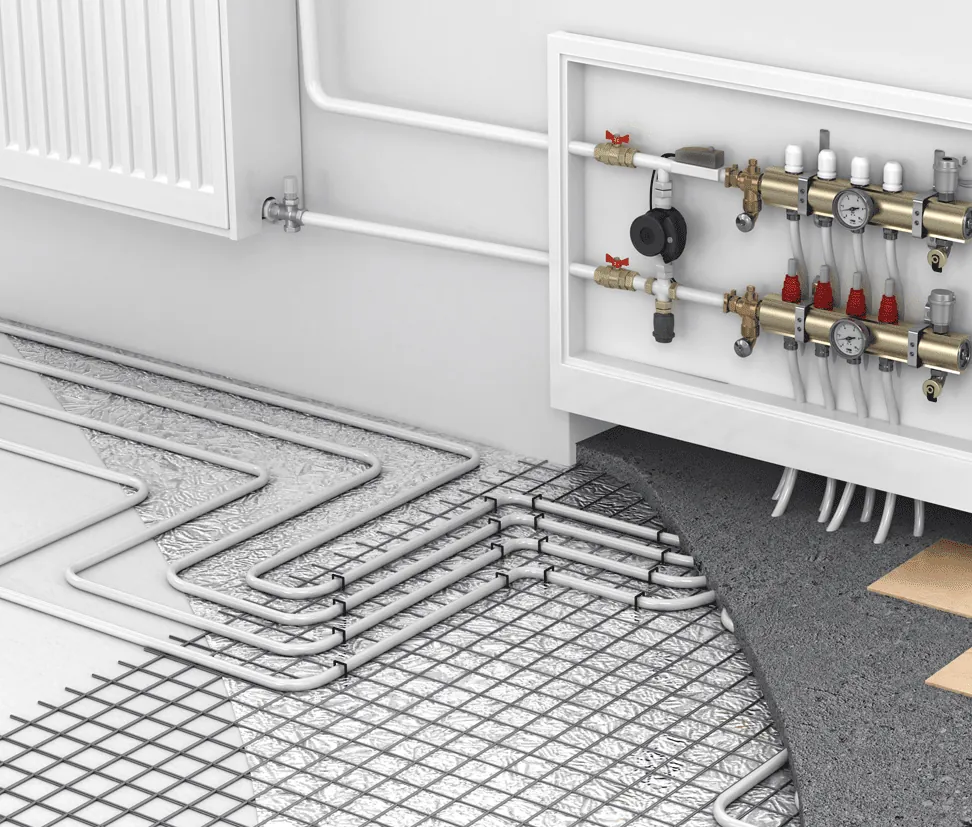
We ran a full heat-loss calculation for the home's ~1,500 heating-degree-day climate and −1 °C design temperature. The result: an 18 kW Maxa i-290 R290 monoblock — rated to −25 °C ambient, so comfortably inside Melbourne's coldest conditions — driving in-slab hydronic underfloor heating across both levels. In-slab PEX-A was laid before each pour, with per-room thermostatic zoning via MAXA controls. The same heat pump reverses in summer to feed chilled water to fan coils, giving the home year-round comfort from one piece of plant.
Because underfloor runs at a low 35–45 °C flow temperature, the i-290 operates in its most efficient band — the key to the running-cost result below. Full system detail is on our heat pump hydronic heating page.
The result
Through its first Melbourne winter the system logged a measured seasonal COP of 4.6 — meaning every 1 kW of electricity delivered 4.6 kW of heat, in exactly the cold climate the owners had been warned would defeat a heat pump. Total heating running cost came in around $780 for the season before the home's rooftop solar offset, which pushed daytime running cost close to zero. The owners report even, draught-free warmth on every floor and no cold spots — and they added summer cooling at no extra plant cost.
The takeaway: a correctly-sized, cold-rated heat pump like the Maxa i-290 doesn't just "keep up" in Melbourne — it's the lowest-running-cost way to heat and cool a well-built home. For a similar project, see heat pump hydronic heating Melbourne or read the Maxa i-290 vs i-32V5 comparison.