★★★★★
"AHHAC delivered our 22-zone underfloor system on time, on budget and to spec. The crew were tidy, the documentation was thorough, and the commissioning was textbook."
David Chen
Custom Builder · Mosman, NSW
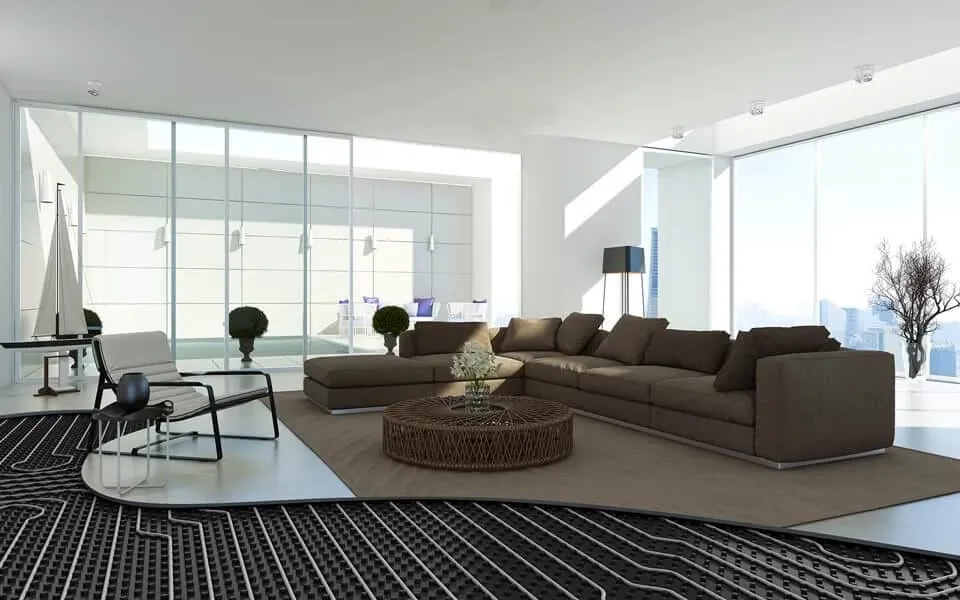
Ground-source heat pumps draw stable temperatures from below the Earth's surface — the most efficient heat source you can install, with COP 4.5–5.5 and a 50+ year ground loop life.
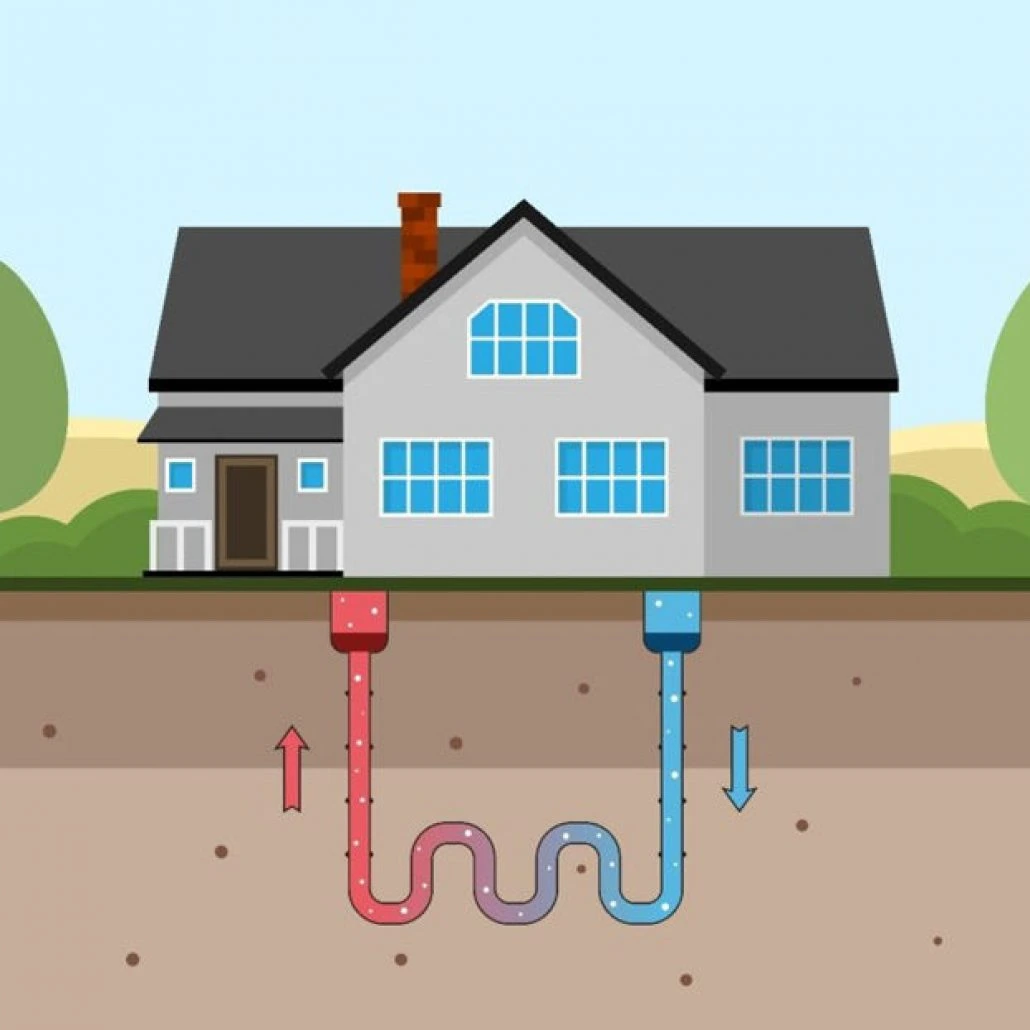
Below 2 metres deep, the ground stays at roughly 14–18°C all year round — regardless of how cold the air gets above. A geothermal (ground-source) heat pump extracts that constant temperature via buried collectors, then concentrates it into your hydronic network.
Because the source temperature is so stable, geothermal heat pumps achieve the highest COPs of any heat source — 4.5 to 5.5. They're more expensive to install up-front but dramatically cheaper to run for the next 50+ years.
Horizontal trench collectors are buried in trenches 1.5–2m deep across an area roughly 2–3× your home's footprint. Cheaper to install, needs available land area, ideal for rural or large suburban blocks.
Vertical boreholes (typically 50–150m deep) take much less land surface but require a drilling rig. Better for built-up sites where land is limited. Slightly higher install cost but identical performance.
Geothermal is the most expensive option to install but the cheapest to run. For high-load homes (4+ bedrooms, cool climates, year-round occupation), the lifecycle cost is unbeatable.
It also reverses cleanly for summer cooling — the same ground loop that delivers heat in winter delivers chilled water in summer. The stable ground temperature makes geothermal the most efficient COOLING option as well.
And the ground loop is silent — there's no outdoor compressor unit constantly running. The only equipment you can hear is the small indoor unit in your service area.
For high-load homes (4+ bedrooms, cooler climates), yes. Geothermal achieves COP 4.5–5.5 — the highest of any heat source — meaning lower running costs for the next 50 years. Payback against air-source heat pumps is typically 8–14 years; ground loops last 50+ years.
Horizontal trenches (1.5–2m deep) are cheaper to install but need 2–3× your home's footprint of available land. Vertical boreholes (50–150m deep) take less land but require a drilling rig — typical for built-up sites.
Yes — geothermal heat pumps reverse direction in summer to deliver cooling through the same hydronic network. The stable ground temperature makes geothermal the most efficient cooling option as well.
"AHHAC delivered our 22-zone underfloor system on time, on budget and to spec. The crew were tidy, the documentation was thorough, and the commissioning was textbook."
"We've worked with AHHAC for 17 years. They've installed and serviced our hot water plant across three commercial buildings — and they pick up the phone on weekends."
"Three mobs quoted us; AHHAC's design was the only one based on a proper heat-loss calculation. The system runs beautifully — the others would've been oversized and expensive."