★★★★★
"AHHAC delivered our 22-zone underfloor system on time, on budget and to spec. The crew were tidy, the documentation was thorough, and the commissioning was textbook."
David Chen
Custom Builder · Mosman, NSW
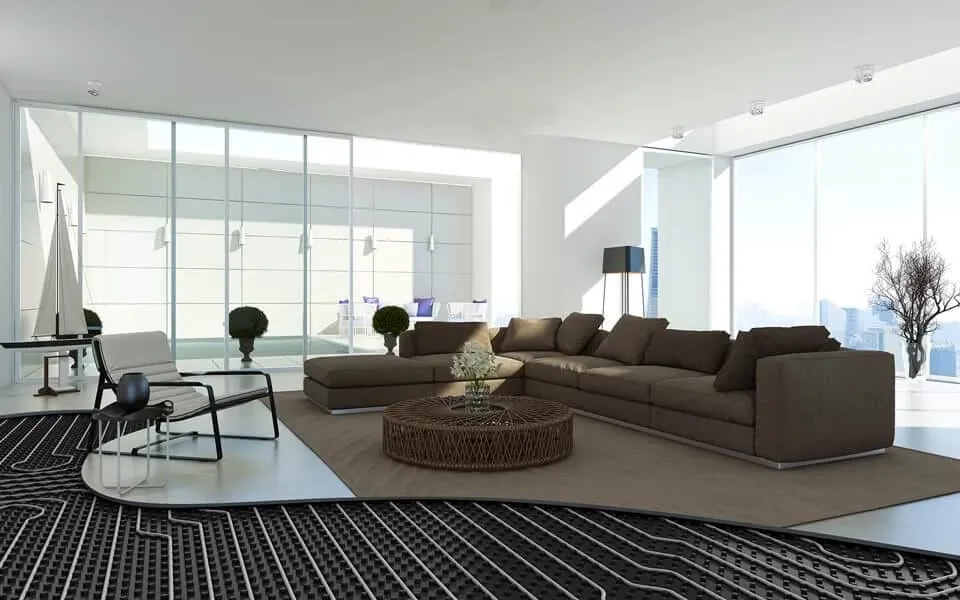
Yes, you can cool your home through the floor too. Here's why architects and demanding homeowners are increasingly specifying it.
Underfloor cooling works by circulating chilled water (8–14°C) through the same pipework that delivered heating in winter. The floor surface drops to about 19–21°C — gently absorbing radiant heat from your body and the room.
It's not as fast or aggressive as ducted cooling — but for many Australian homes, it's actually preferable. No fans, no draughts, no allergens.
Underfloor cooling shines in well-insulated homes with controlled humidity. It's perfect for: bedrooms, libraries, home offices, bathrooms, and any space where you value silence over rapid temperature change.
We pair it with a small fan-coil dehumidifier and a dew-point sensor to prevent any condensation issues.
No — there's no air movement at all. The floor surface drops to about 19–21°C and gently absorbs radiant heat from your body and the room. It feels comfortable, not breezy.
For well-insulated homes with modest cooling loads, yes. For larger cooling demands (hot Sydney summers, exposed western glazing) we pair underfloor cooling with a small fan-coil unit for peak-day boost. Most days, underfloor alone is sufficient.
Significantly better — no air recirculation means no dust, mould spores or pet dander pushed through every room. Asthma and allergy sufferers consistently report dramatic improvement after switching from ducted AC to hydronic cooling.
"AHHAC delivered our 22-zone underfloor system on time, on budget and to spec. The crew were tidy, the documentation was thorough, and the commissioning was textbook."
"We've worked with AHHAC for 17 years. They've installed and serviced our hot water plant across three commercial buildings — and they pick up the phone on weekends."
"Three mobs quoted us; AHHAC's design was the only one based on a proper heat-loss calculation. The system runs beautifully — the others would've been oversized and expensive."