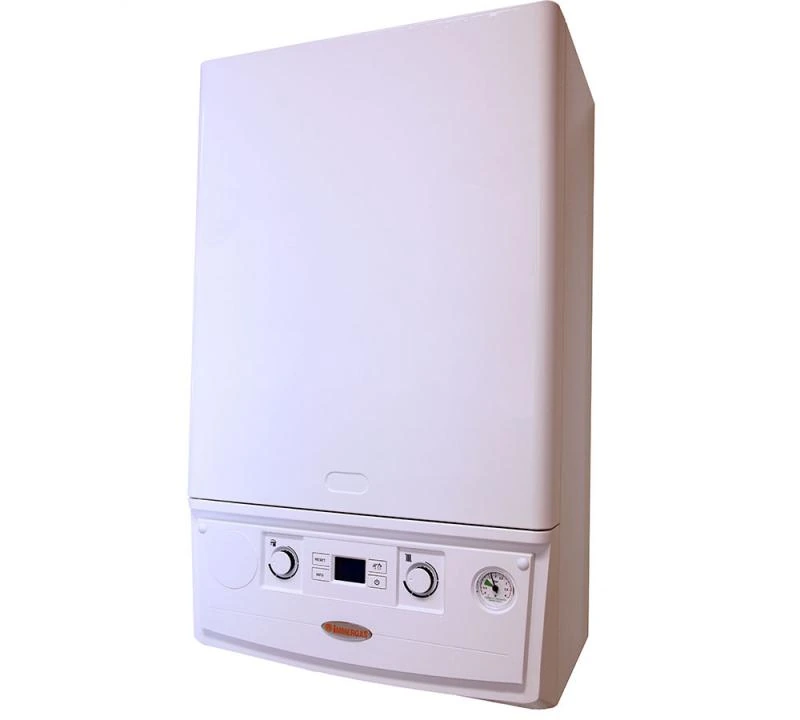
- An electric hydronic boiler is ~99% efficient but roughly 2–3× the running cost of a heat pump.
- A hydronic heat pump (COP 3.5–5.5) is cheaper to run but costs more up front and needs outdoor space.
- Electric boiler wins for tight apartments and small solar-backed loads; heat pump wins almost everywhere else.
If you're removing gas from a hydronic system, both an electric hydronic boiler and a hydronic heat pump will heat your radiators and underfloor with zero on-site combustion. The difference is efficiency — and it's a big one. An electric boiler converts electricity to heat at about 99% (1 kW in, 1 kW out). A heat pump moves heat rather than making it, so 1 kW in becomes 3.5–5.5 kW out. That single fact drives most of the decision.
Running cost — the decisive factor
Because a heat pump delivers 3.5–5.5× more heat per unit of electricity, it costs roughly a third of what an electric boiler costs to run for the same heat output. On a 200 m² home that can be a $1,500–$2,500/year difference in a cold climate. Over a 15-year system life, the heat pump's lower bills dwarf its higher purchase price. This is why AHHAC steers most clients toward a heat pump hydronic heating system.
When an electric boiler still makes sense
Electric hydronic boilers aren't obsolete — they win in specific cases: (1) tight apartments and townhouses where there's no room for an outdoor heat-pump unit; (2) small or intermittent loads (a granny flat, a single-zone slab) where the heat pump's higher cost isn't justified; (3) heavy rooftop solar PV that effectively pays the running cost during the day; and (4) lowest up-front budget, since electric boilers are cheaper to buy and install. They're also silent, flueless and compact. See the range on our electric & gas hydronic boilers page.
When the heat pump wins
Almost everywhere else. Any home with a decent heating load, outdoor space for the unit, and a 10+ year horizon will save far more on running cost than the heat pump's price premium — especially in cold climates like Melbourne and Canberra. The heat pump also reverses for summer cooling, which an electric boiler can't do. Pair it with solar PV and the running cost approaches zero.
How to decide
Start with the load and the space. No outdoor room or a tiny load → electric boiler. Real heating load and outdoor space → heat pump, every time. If budget is tight but you have solar, an electric boiler can bridge the gap. AHHAC installs both and will run a heat-loss calculation before recommending — see our heat pump brand comparison once you've settled on a heat pump.