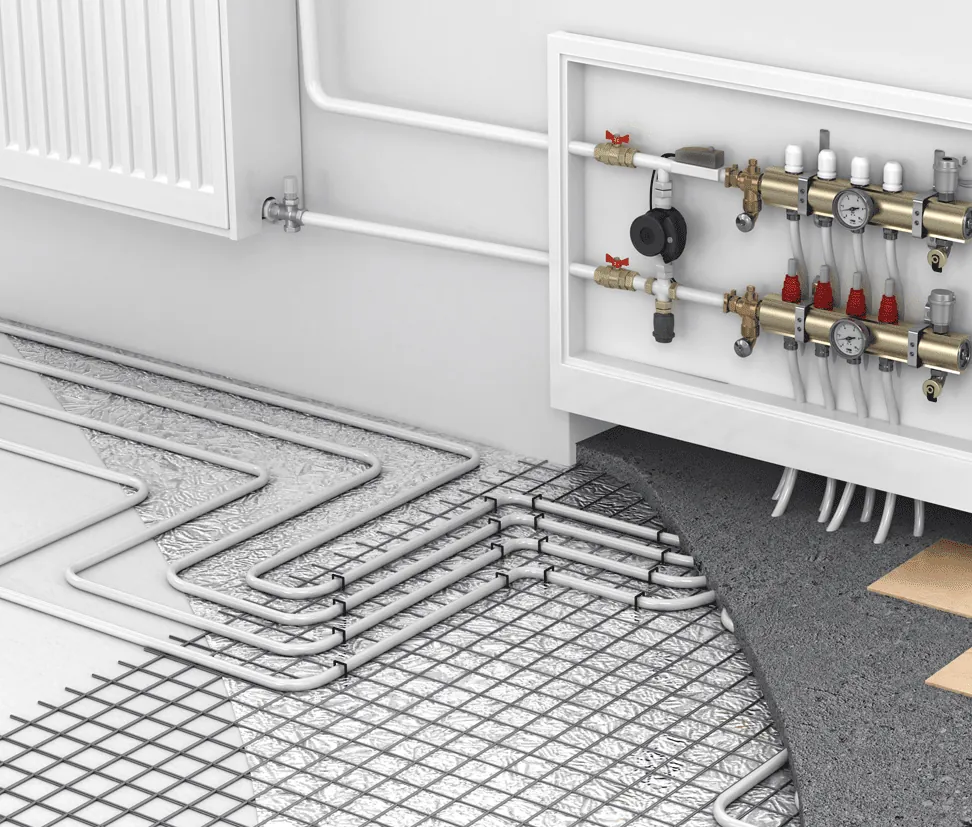
- A 200 m² hydronic underfloor heating install runs roughly $32k–$55k in Sydney and $35k–$60k in Melbourne in 2026.
- In-screed retrofits cost less than in-slab new-build — but the biggest lever on running cost is the heat source.
- Pairing underfloor with a heat pump (35–45 °C flow) gives the lowest running cost in both cities.
Hydronic underfloor heating is the most comfortable — and most efficient — way to heat an Australian home, but it's also the emitter with the widest price range. The final number depends on new-build vs renovation, the heat source, the floor area and finish, and the city's climate. Below are realistic 2026 ranges for Sydney and Melbourne, the two biggest hydronic markets, based on what AHHAC actually quotes. For the system detail, see our hydronic underfloor heating page.
Install cost — Sydney vs Melbourne
The headline install ranges for a typical 200 m² home in 2026:
- Sydney, in-slab (new build): $32,000–$55,000
- Sydney, in-screed (renovation): $24,000–$42,000
- Melbourne, in-slab (new build): $35,000–$60,000
- Melbourne, in-screed (renovation): $25,000–$45,000
Melbourne runs about 8–12% higher for the same floor area because its colder winters (~1,500 heating-degree-days vs Sydney's ~700) demand larger plant and more insulation. See the local detail on our hydronic underfloor heating Melbourne page.
What drives the quote
Five factors move the number most: (1) heat source — a heat pump costs more up front than a gas boiler but far less to run; (2) in-slab vs in-screed — slab is cheaper per m² but only works at new-build stage; (3) floor area and zoning — more zones means more manifold and control cost; (4) floor finish — stone and tile conduct best, thick carpet needs a hotter flow; (5) insulation — a well-insulated slab lets you run a smaller, cheaper heat pump.
Running cost — where the real money is
Install price is a one-off; running cost is forever. Underfloor's low 35–45 °C flow temperature is exactly where a heat pump is most efficient (COP 4–5), so a heat-pump-driven underfloor system is 60–75% cheaper to run than gas. On a Melbourne home that's often a $700–$1,200/year difference; in Sydney's milder climate the gap is smaller but still meaningful. Pair the heat pump with rooftop solar PV and daytime running cost approaches zero.
Is it worth it?
For a new build or major renovation in either city, yes — underfloor delivers the best comfort (silent, even, dust-free), the lowest running cost when heat-pump-driven, and a 30+ year design life on the distribution. The up-front cost is the main barrier. For rooms you only use sometimes, or a lighter-touch retrofit, panel radiators can be the smarter spend. AHHAC will run a heat-loss calculation and give you a fixed-fee quote within 24 hours.