★★★★★
"AHHAC delivered our 22-zone underfloor system on time, on budget and to spec. The crew were tidy, the documentation was thorough, and the commissioning was textbook."
David Chen
Custom Builder · Mosman, NSW
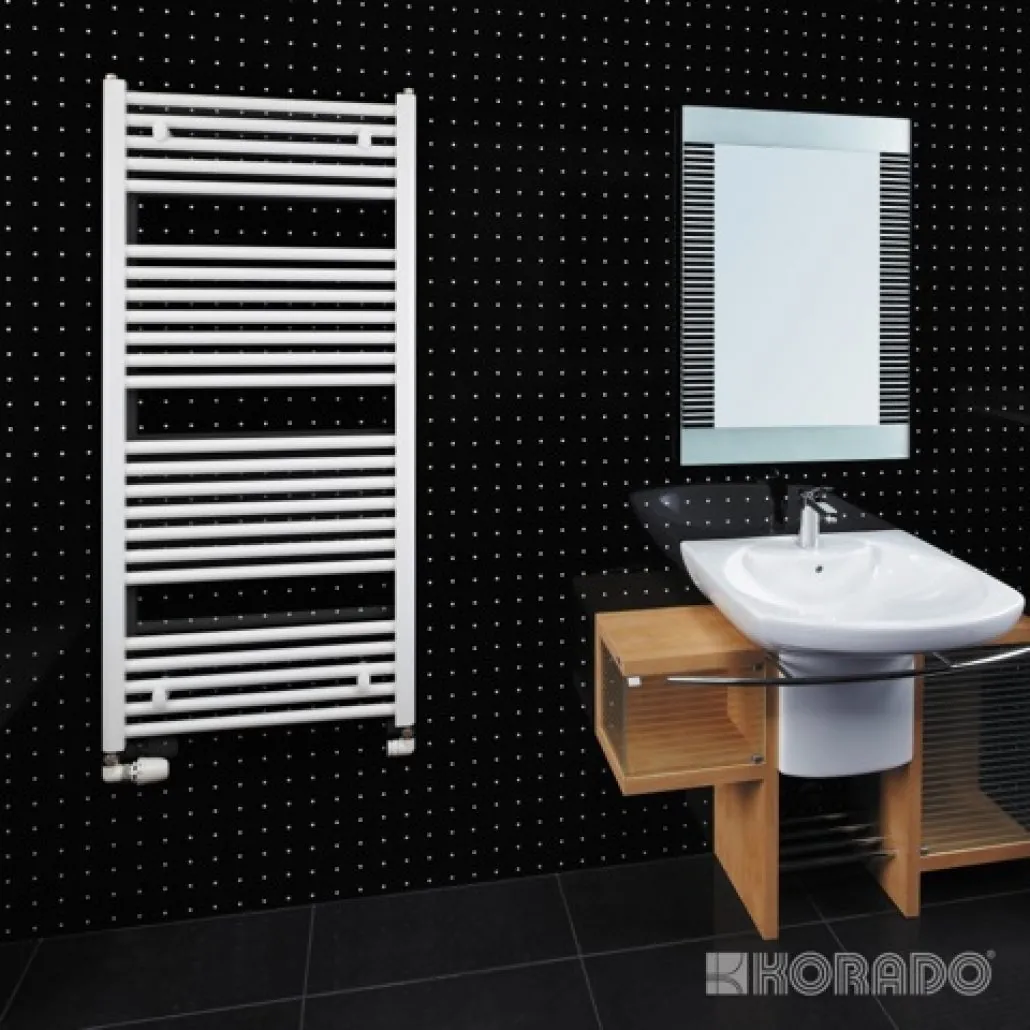
European hydronic panel radiators, designer towel rails and column radiators for Sydney homes — warm rooms in minutes, room-by-room control, and easy retrofit into existing houses. Designed and installed by AHHAC from our Punchbowl showroom and quoted within 24 hours.
Hydronic radiators in Sydney are the simplest way to add hydronic heating to an existing home: slim European panels warm each room in 15–25 minutes, every radiator has its own thermostatic valve, and a whole-home install usually takes one to three days with no floor lifting. A full radiator system typically costs $12,000–$30,000. AHHAC sizes each radiator to the room's heat loss and installs De'Longhi and IMAS panels from our Punchbowl showroom.
Reviewed by the AHHAC Technical Team — licensed plumbers & hydronic engineers, NSW Lic 262528C.How we write & review

 ImmergasSimeThermaSkirt™
Hydronic radiators are the most flexible way to bring hydronic heating into a Sydney home. Warm water from a heat pump or boiler circulates through slim, wall-mounted panel radiators that heat each room quickly and quietly, with a thermostatic valve on every unit so you control the temperature room by room. Unlike underfloor, radiators don't need the floor lifted, which makes them the natural choice for retrofits, renovations, apartments and heritage homes — and unlike a wall-mounted air conditioner, they heat gently and silently, with no fan noise and no blown dust. AHHAC designs and installs the full range of hydronic radiators across Greater Sydney from our Punchbowl showroom.
The defining advantage of radiators is speed. A modern European panel radiator warms from cold in 15–25 minutes, versus the several hours an in-slab underfloor system takes to come up to temperature. That makes radiators ideal for rooms you use intermittently — bedrooms, studies, guest rooms — and for anyone who wants heat on demand rather than a slow-and-steady background warmth. They're also the easiest hydronic system to add to a house that already exists, using a discreet "manifold and home-run" pipe layout that avoids joins in the walls.
Whether you're searching for hydronic radiator panels for a new apartment, De'Longhi or IMAS radiators for a renovation, or a designer towel rail for a bathroom, AHHAC sizes each radiator to the room's heat loss and installs a balanced, quiet system. This page is part of our wider Sydney hydronic heating service.
A hydronic radiator is a steel (or aluminium) panel with waterways running through it. Warm water from your heat pump or boiler flows through the panel, and the large surface area radiates and convects gentle heat into the room. Because the panel itself is small and light compared with a concrete slab, it responds fast — minutes, not hours — and it cools down quickly too, so you're not paying to heat a room after you've left it. Each radiator carries its own thermostatic radiator valve (TRV), so every room holds its own set point independently. That per-room control is one of hydronic's biggest advantages over single-thermostat ducted systems.
Radiators are the retrofit champion of the hydronic world. Using a manifold-and-home-run layout, we run a single continuous pipe from a central manifold to each radiator with no joins buried in walls — neat, reliable and minimally disruptive. A typical Sydney radiator install takes one to three days, and because there's no slab work, it suits terraces, apartments, semis and double-storey homes where underfloor would mean lifting every floor. For homes that want the best of both, radiators pair happily with underfloor in wet areas, all run from the same heat source.
AHHAC supplies premium European hydronic radiators, led by De'Longhi and IMAS, alongside designer vertical panels, restored cast-iron column radiators for period homes, and heated towel rails for bathrooms. Slim double- and triple-panel radiators deliver high output from a compact footprint; vertical designer radiators turn a heat source into a feature wall; column radiators suit Federation and Victorian interiors; and dual-fuel towel rails keep towels warm even in summer when the heating is off. We size every unit to the room's calculated heat loss so the system is neither starved nor oversized.
Radiators traditionally ran hotter than underfloor, but modern oversized panels are designed for lower flow temperatures — which means they pair well with an efficient hydronic heat pump. For Sydney's mild climate a Maxa i-290 or i-32V5 running radiators at 45–55 °C delivers strong efficiency and low running cost, especially with rooftop solar. Where mains gas is connected, a condensing gas boiler is a fast-response alternative. We size the emitters and the heat source together so the whole system runs in its efficient band.
It's the most common question we're asked, and the honest answer is "it depends on the build." Underfloor gives the most even, invisible, luxurious whole-home warmth and suits new builds; radiators give faster response, easier retrofit and room-by-room control and suit renovations and existing homes. Many Sydney homes use both. Our detailed comparison of underfloor heating vs radiators walks through cost, comfort, response time and retrofit-ability so you can choose with confidence, and our guide to ducted vs hydronic heating covers why hydronic beats blown air on comfort and running cost.
For Federation, Victorian and Art Deco homes across the Inner West, Eastern Suburbs and North Shore, radiators (or heritage-friendly skirting heating) let you add real warmth without ducting bulkheads or slab works. Cast-iron column radiators in particular look at home in period interiors and last 50-plus years. As with any hydronic system, the design must start with a heat-loss calculation so each radiator is correctly sized and the system can be balanced — the pitfalls of skipping this are covered in our guide to mistakes to avoid. From our Punchbowl showroom we cover all of Sydney, from the Eastern Suburbs and Inner West to the North Shore, Northern Beaches, the Hills and the Sutherland Shire.
Quotes for hydronic radiators in Sydney can look alike on paper and perform very differently once winter arrives. When owners bring us other quotes to compare, these are the questions we suggest they ask of every installer, including us.
Apartment and townhouse owners have one more step. Most strata schemes require owners corporation approval before you drill through common walls or put plant on a balcony, so allow time for it and ask your installer for the drawings the committee will want to see.
Where wall space is tight, such as narrow terrace hallways or rooms lined with joinery, skirting-board hydronic heating can share the same circuit. Browse the IMAS radiator range for panel styles, and if you plan to electrify, our heat pump hydronic heating Sydney page explains the matching heat source.
Written from on-site experience by the AHHAC Technical Team.
AHHAC's in-house design and service team — licensed plumbers and hydronic engineers (Lic 262528C) who have designed and installed 2,400+ hydronic heating, cooling and hot water systems across Australia since 1998.
We design hydronic radiators from a room-by-room heat-loss calculation, install it with our own licensed plumbers to AS/NZS 3500 (plumbing) and AS/NZS 5601 (gas), commission and document it, and service it for the life of the system. Nothing is subcontracted out.
Last updated · AHHAC
"AHHAC delivered our 22-zone underfloor system on time, on budget and to spec. The crew were tidy, the documentation was thorough, and the commissioning was textbook."
"We've worked with AHHAC for 17 years. They've installed and serviced our hot water plant across three commercial buildings — and they pick up the phone on weekends."
"Three mobs quoted us; AHHAC's design was the only one based on a proper heat-loss calculation. The system runs beautifully — the others would've been oversized and expensive."