★★★★★
"AHHAC delivered our 22-zone underfloor system on time, on budget and to spec. The crew were tidy, the documentation was thorough, and the commissioning was textbook."
David Chen
Custom Builder · Mosman, NSW
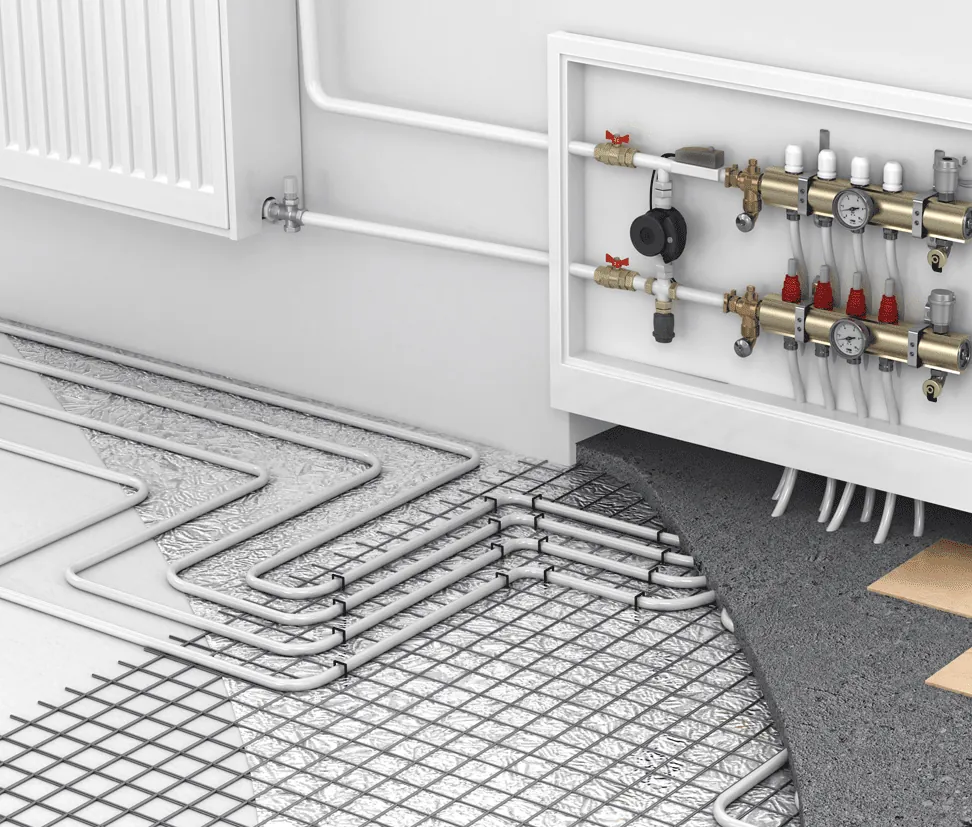
Hydronic heating, cooling and hot water for Kew homes — designed and installed by AHHAC, Melbourne's hydronic specialists, from our nearest showroom in Laverton North.
Hydronic heating in Kew typically costs $35,000–$60,000 installed for in-slab underfloor with a heat pump, with radiators costing less, and in a suburb of Edwardian, Federation and architect-designed homes many projects form part of a wider renovation or rebuild. Melbourne's roughly 1,500 heating degree-days make whole-home hydronic worthwhile. AHHAC works alongside your builder and architect, designing from a room-by-room heat-loss calculation and installing from our Laverton North showroom.
Reviewed by the AHHAC Technical Team — licensed plumbers & hydronic engineers, NSW Lic 262528C.How we write & review
 ImmergasSimeThermaSkirt™
Kew is one of Melbourne's strongest hydronic markets, and it's easy to see why. This is a suburb of grand period homes, established gardens and discerning owners, sitting in a city with long, genuinely cold winters — roughly 1,500 heating-degree-days and a −1 °C design temperature. Homeowners here want warmth that is silent, even and invisible, that respects the architecture of an Edwardian or Federation home, and that costs as little as possible to run over a long heating season. That is exactly what hydronic heating delivers, and AHHAC designs and installs the full range across Kew, Kew East and Studley Park from our Laverton North showroom, as part of our wider Melbourne hydronic heating service.
Melbourne's climate is the reason hydronic is so at home in Kew. Unlike Sydney or Brisbane, Melbourne has a real, sustained winter, and that makes the comfort and efficiency of hydronic heating genuinely valuable rather than a nice-to-have. Hydronic warms surfaces rather than blowing hot air, so the heat is even from floor to ceiling with no draughts, no fan noise and no dry, dusty air recirculated through the house. For families in large Kew homes — where a ducted system would leave rooms unevenly heated and run up big bills — hydronic keeps every room comfortable at a lower thermostat setting. It's also silent and allergen-free, which matters in homes with children or anyone sensitive to dust.
Kew's building stock is a designer's dream and a heating engineer's interesting problem. Grand Victorian and Edwardian homes, Federation villas, mid-century houses and contemporary architect rebuilds all sit side by side, often on large blocks with high ceilings and generous glazing. High ceilings and big windows increase heat loss, which is exactly why a proper heat-loss calculation — room by room — matters so much here; a system sized by rule of thumb will leave the big living spaces cold. For new builds and major renovations we favour in-slab hydronic underfloor heating, which turns the slab into a silent, invisible radiator and rides through Melbourne's frosty mornings. For period homes where the floors can't be lifted, European panel radiators or heritage-friendly skirting heating are the answer.
The right system depends on the house. For a Kew new build or a full renovation with new floors, in-slab or in-screed underfloor driven by an all-electric heat pump gives the most even, lowest-running-cost result — the underfloor's low flow temperature keeps a Maxa i-290 in its most efficient band. For a heritage home or a room-by-room renovation, radiators warm quickly and retrofit easily without disturbing period floors. Many large Kew homes use a blend: underfloor through the open-plan living and kitchen areas, radiators in bedrooms and upstairs additions, all run from one heat source. If you're weighing the two, our comparison of underfloor heating vs radiators lays out the trade-offs in detail.
A lot of Kew's most beautiful homes are heritage-listed or heritage-sensitive, and their owners rightly refuse to scar original features with ducting bulkheads or clumsy plant. Hydronic is the heritage-friendly answer. European panel radiators and restored cast-iron column radiators suit period interiors and install without slab works; for the most discreet option, ThermaSkirt skirting-board heating replaces the skirting board around each room and disappears entirely, warming from the perimeter with nothing on show. We've delivered exactly this kind of heritage-sensitive install across Melbourne and Sydney's premium period suburbs.
Over a long Melbourne winter, running cost is where a well-designed Kew system pays for itself. An all-electric heat pump runs at a seasonal COP of 4 or more — a fraction of the cost of gas or resistive electric heating — and pairs perfectly with the rooftop solar many Kew homes already have, pushing daytime running cost close to zero. On a reversible heat pump, the same system reverses in summer to provide silent chilled-water cooling through the underfloor or fan coils, so one all-electric plant covers the whole year. It's the lowest-running-cost, lowest-carbon way to keep a large home comfortable.
AHHAC serves Kew and the wider inner east from our Laverton North showroom. Every job runs the same way: a consult and site visit; a heat-loss calculation, zone plan and fixed-fee design back within 24 hours; an in-house install to AS/NZS standards; and full commissioning with a documented handover. Beyond Kew we cover Hawthorn, Camberwell, Balwyn, Ivanhoe and the wider inner-eastern suburbs — see our Melbourne hydronic heating page for the full service area.
In Kew, hydronic heating is rarely a standalone job. It usually arrives as part of a bigger project: a rear extension on an Edwardian villa, a second storey on a Federation home, or a full architect-designed rebuild on a Studley Park slope. On those projects the quality of the heating depends as much on timing and coordination as on the equipment, and we would much rather be involved at drawing stage than called in after the frame is up.
Floor finishes deserve an early conversation too. Engineered timber, tile and stone all work well over underfloor heating, while thick solid boards and heavy underlay slow the response and reduce output, so we factor the chosen finish into pipe spacing and flow temperatures. Our list of underfloor heating installation mistakes to avoid is worth sharing with your builder, and our Melbourne new-build case study follows the full sequence from slab to handover.
Kew projects are run from our Laverton North showroom, and the same team returns for annual servicing once you have moved in. For the wider service area and system options, see hydronic heating Melbourne.
Written from on-site experience by the AHHAC Technical Team.
AHHAC's in-house design and service team — licensed plumbers and hydronic engineers (Lic 262528C) who have designed and installed 2,400+ hydronic heating, cooling and hot water systems across Australia since 1998.
We design hydronic heating from a room-by-room heat-loss calculation, install it with our own licensed plumbers to AS/NZS 3500 (plumbing) and AS/NZS 5601 (gas), commission and document it, and service it for the life of the system. Nothing is subcontracted out.
Last updated · AHHAC — serviced from Laverton North
"AHHAC delivered our 22-zone underfloor system on time, on budget and to spec. The crew were tidy, the documentation was thorough, and the commissioning was textbook."
"We've worked with AHHAC for 17 years. They've installed and serviced our hot water plant across three commercial buildings — and they pick up the phone on weekends."
"Three mobs quoted us; AHHAC's design was the only one based on a proper heat-loss calculation. The system runs beautifully — the others would've been oversized and expensive."