Hydronic Heating & Cooling Specialists
Home/Hydronic Heating Albury
Local showroom · Albury, NSW

Hydronic Heating Albury–Wodonga — built for frosty border winters.

Heat pump hydronic heating, in-slab underfloor heating and European panel radiators for homes on both sides of the Murray: Albury, Lavington, Thurgoona, Wodonga and the surrounding towns. Every system is designed from a room-by-room heat-loss calculation and installed by our own licensed team from our North Albury showroom.

The short answer

Updated

AHHAC designs and installs hydronic heating in Albury, Wodonga and the surrounding Murray border towns from our North Albury showroom. Winters here are frosty: BOM's Albury Airport station averages a 3.1 °C July minimum and about 17 mornings a year at or below 0 °C. Most homes suit an all-electric heat pump driving underfloor heating or radiators, typically $20,000–$60,000+ installed for a whole home, with a fixed-fee quote within 24 hours of the site visit.

Albury July mean min
3.1 °C (BOM)
Mornings ≤ 0 °C a year
About 17 (BOM)
Whole-home install
$20k–$60k+
Design and quote
Within 24 hours

Reviewed by the AHHAC Technical Team — licensed plumbers & hydronic engineers, NSW Lic 262528C.How we write & review

About AHHAC Albury

Albury's hydronic heating, cooling & hot water specialists.

AHHAC designs and installs hydronic heating in Albury, Wodonga and the towns around the Murray border from our North Albury showroom at 845-847 Leslie Drive. We work on both sides of the river: Albury, Lavington and Thurgoona in NSW, Wodonga and Baranduda in Victoria, and out to Corowa, Howlong, Rutherglen, Beechworth and Holbrook. Every job starts with a room-by-room heat-loss calculation, and the fixed-fee design and quote come back within 24 hours of the site visit.

Border winters are colder than they look on a map. The Bureau of Meteorology's Albury Airport station (records from 1993) averages a July minimum of 3.1 °C and a July maximum of only 13.3 °C. It logs around 44 mornings a year at 2 °C or below and about 17 at or below freezing, and one July morning in ten gets down to about −1 °C or colder. Out of town it is colder again: BOM's long-running Rutherglen Research station averages a 2.0 °C July minimum and roughly 41 sub-zero mornings a year. Those frosty, damp mornings, when the house has lost its warmth overnight and everyone is up at once, are the conditions a heating system here has to be designed around.

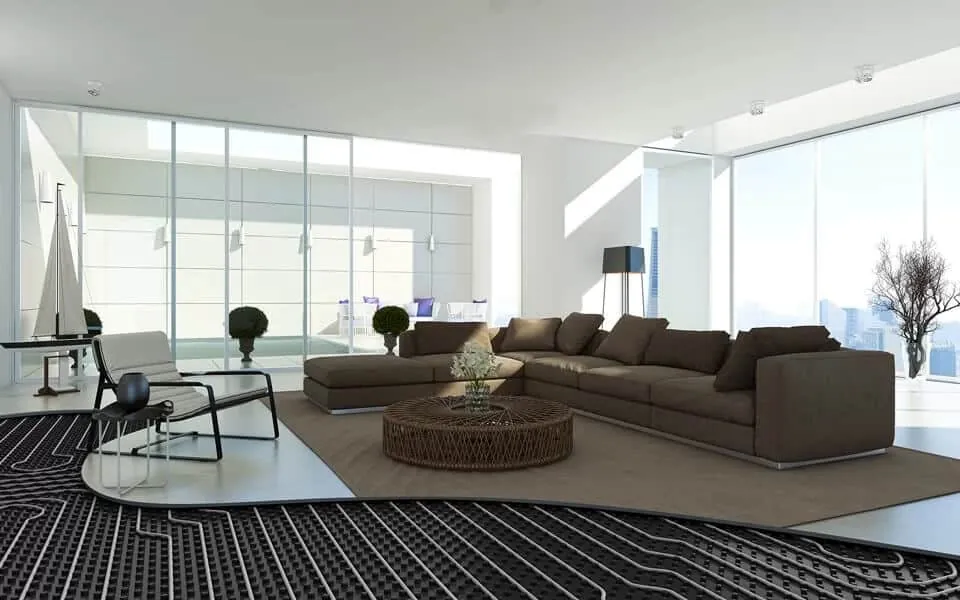
Hydronic heating suits that pattern because it warms the building rather than just the air. Hot water circulates through underfloor heating pipes in the slab or through hydronic radiators on the walls, so floors, walls and furniture hold heat through a frosty night. There is no fan noise, no dust blown around the house and no cold draught when the system cycles off. For a home that is occupied most of the day, in-slab underfloor running steadily at 35–45 °C is the most comfortable and economical choice. For a home that sits empty during work hours, radiators make more sense: they bring a room up to temperature in 15–25 minutes, while an in-slab floor responds over hours.

Older brick homes and new estates need different systems. Central, East and South Albury and the older streets of Wodonga have a lot of Federation, inter-war and post-war brick homes, many on suspended timber floors. Those homes suit radiators: pipework runs through the subfloor without lifting a board, and steel panel or column radiators from the IMAS range sit under the windows, where most heat is lost. In the new estates around Thurgoona, Lavington's northern edge and Wodonga's growth areas towards Baranduda, most homes are slab-on-ground, which makes in-slab underfloor heating the natural fit, as long as we are involved before the slab is poured. If the slab is already down, an in-screed system laid over it, or radiators, are the alternatives.

Brick construction affects the design in other ways too. Solid double-brick walls hold a lot of heat once they are warm, but they take a long time to come up from cold, which favours steady, low-temperature heating over short bursts. Brick veneer with thin or patchy wall insulation loses heat faster. In both cases we often recommend topping up ceiling insulation, insulating under a timber floor and sealing obvious draughts before we size the plant, because a smaller heat pump on a tighter house costs less to buy and less to run. In Beechworth, Rutherglen and other older towns with stone and brick buildings, ThermaSkirt skirting-board heating is another option: it replaces the skirting and leaves walls, floors and ceilings untouched.

Moving from gas to electric. Many border homes still run ducted gas, gas space heaters or an older gas hydronic boiler, and acreage properties beyond the gas mains often rely on bottled LPG. Our most common recommendation now is an all-electric air-to-water heat pump. A heat pump delivers 3.5 to 5.5 units of heat for each unit of electricity, and running costs are typically 60–75% lower than gas. The Maxa i-290 R290 monoblock comes in sizes from 6 to 27 kW, so we can match the unit to the house rather than oversizing it. If you already have a gas boiler and radiators in good condition, most of the pipework can usually stay, and our guide to replacing a gas hydronic boiler with a heat pump explains what changes.

Hot summers as well. The same Albury Airport station averages more than 20 days a year at 35 °C or above. A reversible heat pump can supply chilled water in summer through hydronic fan coils or the underfloor pipework, so one plant can both heat and cool. Floor cooling takes the edge off a hot day but cannot match a dedicated air conditioner on a 40 °C afternoon, so for full summer cooling we either include fan coils in the main living areas or suggest keeping an existing reverse-cycle unit for the hottest days. We will tell you which approach suits your house before you commit.

Why Albury homes choose AHHAC

Our own licensed team. AHHAC started in Sydney in 1998 as AJ's Plumbing and has installed more than 2,400 hydronic systems. Albury–Wodonga jobs are carried out by our own licensed plumbers and hydronic engineers, not subcontractors, and installed to AS/NZS 3500 for plumbing and AS/NZS 5601 for gas work. Plumbing and gas requirements differ between NSW and Victoria, so we plan each job around the rules for the side of the river your home is on.

Sized for inland conditions. Getting the size right matters more here than on the coast. A system sized for a Sydney winter will leave an Albury living room cold on a July morning, and an oversized one switches on and off constantly and wastes money. We calculate the heat loss room by room from your floor plan, wall and ceiling construction and glazing, then size the heat pump, pipe spacing and radiators to match. The written design sets out the equipment, zones and flow temperatures, so you can compare our quote line by line with any other.

Honest about cost and fit. Whole-home hydronic heating typically costs $20,000–$60,000+ installed, and radiator systems $12,000–$30,000. It pays off in homes that are heated for long hours over a long season, which describes most family homes on the border. It is not the cheapest answer if you heat one room for a couple of hours a night or mainly want cooling. In that case a reverse-cycle split system will cost far less upfront, and our comparison of hydronic heating vs reverse-cycle air conditioning sets out the trade-offs. For the ongoing numbers, see our hydronic heating running costs guide.

Rebates, hot water and the cold-climate approach. STCs apply only to registered heat pump and solar water heaters, not to the air-to-water heat pumps that drive hydronic space heating, and Victorian Energy Upgrades heating incentives cover air-to-air reverse-cycle units rather than hydronic heat pumps. Our heat pump rebates guide has the detail. If you are replacing gas hot water at the same time, a heat pump water heater can sit beside the hydronic plant; see our hot water systems page. Albury–Wodonga winters sit closer to Canberra's than to Sydney's, and we apply the same cold-climate design approach we use for hydronic heating Canberra projects and across hydronic heating Melbourne.

Service area — Albury and surrounds

AlburyCentral, East, South and North Albury — period and post-war brick homes
LavingtonEstablished brick homes and newer estates on the northern edge
ThurgoonaGrowing new-home estates, well suited to in-slab underfloor
WodongaEstablished suburbs and growth areas across the river in Victoria
BarandudaLarger blocks and newer homes south-east of Wodonga
CorowaMurray River town west of Albury, on the NSW side
RutherglenWine-region town in Victoria with frostier mornings than Albury
BeechworthHistoric town higher in the hills, with older stone and brick homes
HolbrookHume Highway town north-east of Albury
HowlongRiverside town between Albury and Corowa
Who does the work

Albury's licensed hydronic team

AHHAC's in-house design and service team — licensed plumbers and hydronic engineers (Lic 262528C) who have designed and installed 2,400+ hydronic heating, cooling and hot water systems across Australia since 1998.

Every Albury system is designed from a room-by-room heat-loss calculation and installed by our own licensed plumbers and hydronic engineers to AS/NZS standards — never subcontracted out. We hold NSW plumbing licence 262528C and carry full insurance, and we stand behind every install with ongoing local service.

262528C
Plumbing licence
85 164 746 490
ABN
2,400+
Systems installed
Since 1998
Operating in Australia
What we install in Albury

Hydronic systems engineered for Albury homes.

Every Albury project starts with a heat-loss calculation and a fixed-fee design. We size each system to your building, your climate and your living patterns.

Frosty mornings

Frost, fog and defrost: setting up a heat pump for Albury–Wodonga winters

The hardest hour for a heat pump on the border isn't the coldest one. It's a still, damp July morning hovering just above freezing, when moisture in the air freezes onto the outdoor coil. Albury mornings are often like that: BOM's Albury Airport records show 9 am humidity averaging around 90% in July. The heat pump clears the ice by running a short defrost cycle, briefly drawing heat back out of the water circuit. Handled well, nobody notices. Handled badly, the floor cools, the radiators go lukewarm and the unit sits in a puddle of ice.

What we set up differently on frosty sites

  • Enough water in the system. In-slab underfloor holds plenty of heat; a radiator system often doesn't, so we add a buffer tank to cover defrost cycles without a dip in comfort.
  • Somewhere for the meltwater to go. Defrost water runs off the unit every cycle. Draining onto a path or driveway turns it into a sheet of ice by 7 am, so we raise the unit on a stand and direct meltwater to a gravel soak or drain point well away from where people walk.
  • Open air, not a corner. A heat pump tucked into a narrow side passage or under a dripping eave re-breathes its own cold discharge air and ices up faster. We look for a spot with clear airflow and no roof run-off.
  • Run it steadily. Switching an in-slab system off overnight and restarting at 5 am makes the heat pump work hardest in the coldest, iciest hour. A modest overnight setback, with weather-compensated flow temperatures, uses less energy and keeps the slab warm.
  • Size for the cold morning. We size to the heat loss on a cold July morning, not an average day, so the unit isn't flat out every time a frost sets in.

Out of town the margins are tighter. BOM's Rutherglen station averages roughly 41 sub-zero mornings a year against Albury's 17, and Beechworth sits higher in the hills. On those sites we look harder at insulation and, where an existing gas boiler still has life in it, sometimes keep it as a backup. For more on choosing and siting the outdoor unit, see air-source hydronic heat pumps and our heat pump range. Our Canberra hydronic running costs guide covers a similarly frosty climate.

Written from on-site experience by the AHHAC Technical Team.

Common Albury questions

Hydronic heating in Albury — FAQ

How cold does it get in Albury–Wodonga in winter?+
Colder than many people expect. Bureau of Meteorology records for Albury Airport average a July minimum of 3.1 °C and a July maximum of 13.3 °C, with about 17 mornings a year at or below 0 °C. Rutherglen averages around 41 sub-zero mornings a year. We size every system for a cold July morning rather than an average day, so the house stays warm when it matters.
How much does hydronic heating cost in Albury?+
Whole-home hydronic heating typically costs $20,000–$60,000+ installed, and radiator-only systems $12,000–$30,000. Where your home lands depends on floor area, insulation, the number of rooms and zones, and whether underfloor goes into a new slab or radiators go into an existing home. We provide a fixed-fee design and quote within 24 hours of the site visit, based on a room-by-room heat-loss calculation.
Do heat pumps work on frosty Albury mornings?+
Yes, when they are sized and set up properly. An air-to-water heat pump becomes less efficient as the air gets colder, and on damp mornings near freezing it runs short defrost cycles to clear ice from its coil. We allow for both: the heat pump is sized for a cold July morning, the system holds enough water to cover defrost, and the outdoor unit is sited so meltwater drains away safely.
Do you install hydronic heating in Wodonga and on the Victorian side of the border?+
Yes. We install hydronic heating in Wodonga, Baranduda, Rutherglen, Beechworth and the surrounding Victorian towns, as well as Albury, Lavington, Thurgoona, Corowa, Howlong and Holbrook on the NSW side, all from our North Albury showroom. Plumbing and gas requirements differ between the two states, and we plan each job around the rules for the side of the river your home is on.
Are radiators or underfloor heating better for an older Albury brick home?+
For most older brick homes on suspended timber floors, radiators are the better fit. Pipework runs through the subfloor, the floors stay untouched, and rooms warm in 15–25 minutes, which suits households that are out during the day. Underfloor heating suits slab-on-ground homes and extensions. Many homes combine the two, with underfloor in a new rear extension and radiators in the original rooms, all run from one heat pump.
Can I replace my ducted gas or gas boiler with a heat pump hydronic system?+
Usually, yes. If you have a gas boiler and radiators, the pipework is normally kept, and we check each radiator against its room's heat loss, upsizing any that are too small for heat-pump water temperatures. Replacing ducted gas means installing new radiators or underfloor heating instead of the ducts. In both cases a heat pump typically costs 60–75% less to run than gas.
Can a hydronic system cool my Albury home in summer?+
Partly. A reversible heat pump can supply chilled water to fan coils or underfloor pipework, which takes the edge off a hot day. Albury averages more than 20 days a year at 35 °C or above, though, and floor cooling alone cannot match a dedicated air conditioner on a 40 °C afternoon. We usually add fan coils in the main living areas, or suggest keeping an existing reverse-cycle unit for the hottest days.
Are there rebates for hydronic heat pumps in NSW or Victoria?+
Generally not for the space-heating side. STCs apply only to registered heat pump and solar water heaters, not to air-to-water heat pumps used for hydronic heating, and Victorian Energy Upgrades heating incentives cover air-to-air reverse-cycle units rather than hydronic heat pumps. Hot water is different: a heat pump water heater installed at the same time may qualify. Our heat pump rebates guide covers the current schemes.
Free, fixed-fee quote

Get a hydronic heating quote in Albury

  • Room-by-room heat-loss calculation — never a rule-of-thumb guess
  • Fixed-fee design and quote back within 24 hours of the site visit
  • Installed by our own licensed team (NSW Lic 262528C) — no subcontractors
Prefer to talk? Tap to call1300 76 53 39
Tell us a little about your home — takes 30 seconds

No obligation. We reply within 24 hours and only use your details to prepare your quote.

This form is protected by reCAPTCHA and the Google Privacy Policy and Terms of Service apply.

Reviews

What Albury and NSW customers say

★★★★★
Rated 5-star across NSW · ACT · VIC · QLD
★★★★★

"The system has changed our lives. From the first quote to the final commissioning, the AHHAC team were punctual, on-budget and professional on site every single day. I strongly recommend them — we've now had them back for two more properties."

Michael & Sarah Petersen
Heritage renovation · Surry Hills, NSW
Whole-home hydronic underfloor + radiator panels
★★★★★

"AHHAC delivered our 22-zone underfloor system on time, on budget and to spec. The crew were tidy, the documentation was thorough, and the commissioning was textbook. Couldn't ask for more from a trade partner."

David Chen
Custom Builder · Mosman, NSW
New build — 850m² residential
★★★★★

"The annual service has caught small issues before they became big ones — twice now. The detailed report after each visit is genuinely useful. This is what professional service looks like."

The Berenson Family
Blue Mountains, NSW
Annual service plan since 2019
Hydronic heating across Albury–Wodonga

Everything we install in Albury–Wodonga

Last updated Content reviewed by the AHHAC Technical Team (NSW plumbing licence 262528C)Editorial standards
Call nowFree quote