Hydronic Heating & Cooling Specialists
Home/Melbourne/Geelong
Geelong, Bellarine & Surf Coast · VIC

Hydronic heating Geelong

Hydronic heating, cooling and hot water for Geelong homes — designed and installed by AHHAC, Melbourne's hydronic specialists, from our nearest showroom in Laverton North.

The short answer

Updated

Hydronic heating in Geelong usually means in-slab underfloor heating driven by an all-electric heat pump in new estates such as Armstrong Creek and Lara, and panel or column radiators in period homes in Newtown and Geelong West. Coastal homes on the Bellarine and Surf Coast need careful heat pump siting for salt air. AHHAC services the region from our Laverton North showroom, about 50 minutes away, with a fixed-fee quote within 24 hours of a site visit.

Nearest showroom
Laverton North VIC
Drive to Geelong
About 50 minutes
Heat-pump COP
3.5–5.5
Whole-home installed
$20k–$60k+

Reviewed by the AHHAC Technical Team — licensed plumbers & hydronic engineers, NSW Lic 262528C.How we write & review

Authorised supplier & installer
Maxa authorised supplierViessmann authorised installerImmergasSimeThermaSkirt™
Plumbing Lic 262528CABN 85 164 746 4906 showrooms · NSW · ACT · VIC · QLDEst. 1998

AHHAC designs and installs hydronic heating in Geelong, across the Bellarine Peninsula and down the Surf Coast, from in-slab underfloor heating in the new estates south of the city to radiators in Newtown's period homes and heat pumps sited to cope with salt air at Ocean Grove and Torquay. We do not have a Geelong office. The work is run from our Victorian showroom at 43B Patch Circuit, Laverton North, about 50 minutes up the Princes Freeway, by the same in-house licensed plumbers and hydronic engineers who handle our hydronic heating Melbourne projects. This page sets out how we approach each part of the region, and where hydronic is and is not the right call.

A cool, windy climate that rewards even heat

Geelong's winters are long and its wind is relentless. Cold south-westerlies off Bass Strait and breezes across Corio Bay strip heat from walls and windows and push cold air through every gap in an older house, so a home here can feel colder than the thermometer suggests. Hydronic heating answers that in two ways. It warms surfaces, floors, walls and furniture, rather than blowing hot air that escapes through the same gaps, so rooms feel comfortable at a lower thermostat setting. And because it runs quietly in the background through the season, it avoids the cold-start blast and draughts of ducted gas.

Wind matters to the design as well as the comfort. It raises infiltration losses, which we account for in the room-by-room heat-loss calculation, and it affects where the outdoor unit of a heat pump should sit. We size every Geelong system to the actual house and its exposure, not to a Melbourne rule of thumb copied down the freeway. An exposed hilltop home in Highton and a sheltered unit in Geelong West of the same floor area can need quite different plant.

Underfloor heating in Geelong's new estates: Armstrong Creek, Charlemont, Mount Duneed and Lara

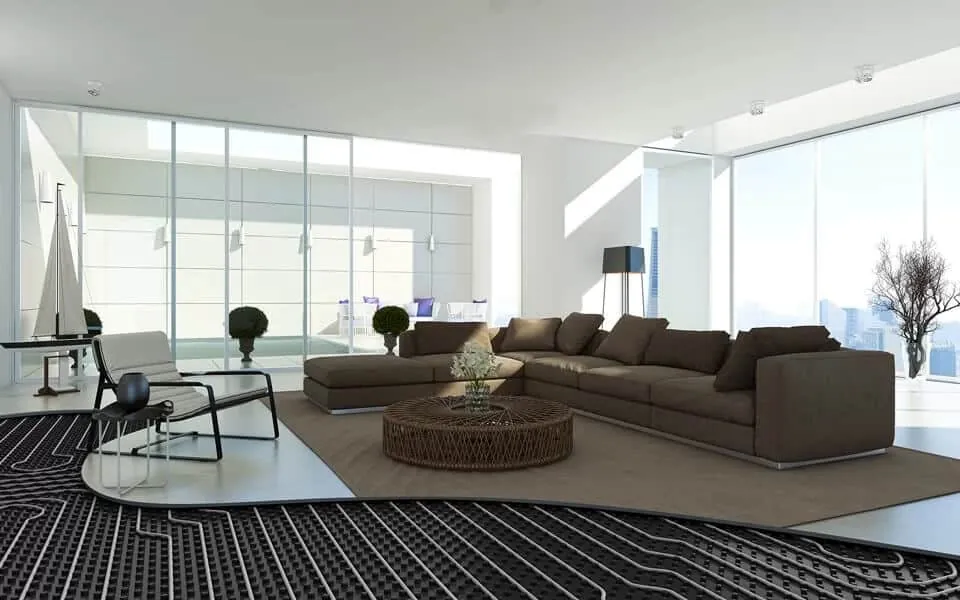
The growth areas south and north of the city are filling with new homes, and a growing share of them are designed all-electric, with no gas connection at all. For those homes, hydronic underfloor heating cast into the slab and driven by an air-to-water heat pump is the most comfortable and efficient heating you can build in. Underfloor runs at 35–45 °C, the low flow temperature where a heat pump is most efficient, at a COP of 3.5–5.5, and the slab becomes a large, silent radiator that rides through a cold, windy week without fuss. The pipework has a design life of 30+ years, so it is a decision you make once.

Timing is everything on a new build. The pipework has to be laid, pressure-tested and kept under pressure during the pour, so we need to be talking with you and your builder before the slab is booked. We specify insulation beneath the pipework and at the slab edge, mark manifold and plant locations on the plans, and coordinate the heat pump's dedicated circuit with the electrician. If your builder offers a standard heating package, ask early whether a hydronic floor can be substituted; it is far cheaper to plan in than to add later. The same approach underpins our hydronic underfloor heating Melbourne work, which covers in-slab design and floor finishes in more depth.

Hydronic radiators in Newtown, Geelong West and Herne Hill period homes

Closer to the centre, Newtown, Geelong West, Herne Hill, Manifold Heights and East Geelong are home to much of the city's Victorian, Edwardian and interwar housing: weatherboards and brick villas on suspended timber floors, with high ceilings, sash windows and open fireplaces. These houses are where hydronic radiator heating shines. We run insulated pipework through the ventilated subfloor and bring it up to a panel or column radiator in each room, with no ducting bulkheads in ornate ceilings and no chasing of original plaster. Each radiator has its own thermostatic valve, so a cold front bedroom can run warmer than a sunny rear kitchen.

Radiators warm a room from cold in 15–25 minutes, which suits period homes that tend to be heated room by room rather than all at once. For the most discreet option in heritage rooms, ThermaSkirt skirting-board heating replaces the skirting and disappears altogether. If you are weighing up panel sizes or column styles, our hydronic radiators Melbourne page explains how we size radiators for heat-pump temperatures and which IMAS ranges suit which rooms.

Highton, Belmont and Grovedale: replacing ducted gas

The established suburbs of Highton, Belmont, Grovedale, Newcomb and Leopold are largely brick-veneer homes from the post-war decades through to the 1990s, and many are still heated by an ageing ducted gas unit. When that unit fails, hydronic is a genuine upgrade rather than a like-for-like swap: no dust pushed through floor vents, no roaring fan, and heat that stays in the room rather than leaking out of ductwork in a cold roof space. Pipework usually runs through the roof space or subfloor to radiators, and a renovated open-plan living area can take an in-screed underfloor zone at the same time. Homes that already have a gas hydronic boiler are simpler still, because the radiators and pipework can often stay; our guide to how to replace a gas hydronic boiler with a heat pump explains the checks involved.

The Bellarine and Surf Coast: salt air and heat pump siting

On the coast, from Ocean Grove, Barwon Heads, Point Lonsdale and Queenscliff on the Bellarine to Torquay, Jan Juc and Anglesea on the Surf Coast, the biggest design question is where the heat pump goes. Salt-laden air is hard on any outdoor coil and its fins, and wind-blown sand does not help. We site the unit on the sheltered side of the house, out of the direct sea breeze where the block allows, on a raised stand clear of sand and pooled water, with room around it to breathe and to be serviced. We choose coastal protection options for the outdoor unit and include coil washing in the annual service.

Inside the house nothing changes: the pipework, manifolds and emitters sit in a sealed water circuit away from the salt air and behave exactly as they would in Highton. Coastal homes also tend to have big glazed living areas facing the view, which is where most of the heat goes on a winter night, so those rooms get particular attention in the heat-loss calculation. For a similar coastal setting on the other side of the bay, see our hydronic heating Mornington Peninsula page.

Heat pump hydronic heating for Geelong homes

For most Geelong homes we recommend an all-electric air-to-water heat pump such as the R290 Maxa i-290, which achieves a heating COP of 4.94 on its 16 kW model and comes in sizes from 6 to 27 kW. Running cost is typically 60–75% lower than gas, it pairs naturally with rooftop solar, and a reversible model can also provide chilled-water cooling through fan coils on hot north-wind days. Our heat pump hydronic heating Melbourne page covers cold-weather sizing in more detail. Where gas is connected and you would rather keep it, a condensing boiler such as the Viessmann Vitodens 100-W, up to 98% efficient, remains a sound choice.

One thing to know before budgeting: Victorian Energy Upgrades heating incentives cover air-to-air reverse-cycle units, not hydronic heat pumps, and small-scale technology certificates apply only to registered heat pump and solar water heaters, not to air-to-water heat pumps used for space heating. Our heat pump rebates guide has the detail, so you can plan on the real installed price.

What hydronic heating costs in Geelong

Whole-home hydronic systems we install range from $20,000 to $60,000+, and complete radiator systems typically cost $12,000–$30,000. Where a project lands depends on floor area, insulation, glazing, wind exposure, the number of zones and the heat source. Every quote starts with a site visit and a room-by-room heat-loss calculation, and the fixed-fee design and quote come back within 24 hours of that visit. For what a system costs to run once it is in, see our guide to hydronic heating running costs in Australia.

How we service Geelong from Laverton North

We are straightforward about distance. Laverton North is roughly 50 minutes from central Geelong, less to Lara and Corio, and further to Torquay, Ocean Grove or Anglesea. We plan around that, scheduling installs as continuous blocks so the job runs from start to finish, and the same team commissions the system, walks you through the controls and returns for the annual service. Every install is carried out to AS/NZS 3500, and AS/NZS 5601 for any gas work. For small plumbing jobs unrelated to the heating, a local plumber may suit you better; for the design, installation and servicing of the hydronic system itself, the drive is not a barrier.

When hydronic is not the right call

Hydronic heating is a long-term investment, and it is not for everyone. If you are likely to sell within a couple of years, or you only need to heat one or two rooms, a reverse-cycle split system will cost far less up front. A weekender that sits empty most of the winter needs a different control strategy from a family home, and an in-slab floor that takes hours to warm is rarely the right emitter there. And in a draughty older house, sealing gaps and topping up ceiling insulation is often the best money you can spend before buying any heating at all. We will tell you if any of these apply.

Why Geelong homes choose AHHAC

  • Systems sized for Geelong's wind exposure, not copied from Melbourne figures
  • In-slab underfloor heating for all-electric new builds in Armstrong Creek, Charlemont and Lara
  • Panel and column radiators for period homes in Newtown and Geelong West
  • Coastal siting and coil protection for heat pumps on the Bellarine and Surf Coast
  • All-electric heat pumps at a COP of 3.5–5.5 — typically 60–75% cheaper to run than gas
  • Room-by-room heat-loss calculation and fixed-fee quote within 24 hours of the site visit
  • In-house licensed plumbers and hydronic engineers, installing to AS/NZS 3500 and AS/NZS 5601
  • Serviced from our Laverton North showroom, about 50 minutes from central Geelong
Weekenders and holiday homes

Hydronic heating for a Surf Coast or Bellarine holiday home

Many homes along the Surf Coast and the Bellarine are weekenders, holiday houses or places their owners plan to retire to. Hydronic heating suits them well, but a home used two days a week needs a different design from one lived in every day, and getting that wrong is the most common way a coastal system disappoints.

Match the emitter to how often you are there

An in-slab floor takes hours to warm from cold, so in a house that sits empty from Sunday night to Friday evening it either runs all week for nobody or greets you with a cold floor on arrival. For part-time homes we usually favour radiators, which warm a room from cold in 15–25 minutes, or an in-screed floor, which has less mass and responds faster than a slab. Our comparison of underfloor heating vs radiators sets out the trade-offs. If the house will become a permanent home within a few years, in-slab underfloor in a new build can still be the right long-term call, and we plan the controls around both phases.

Controls and a sensible setback

Rather than switching off entirely, we set an unoccupied setback that stops the building fabric getting deeply cold, which also helps keep damp and mould at bay in a closed-up coastal house. A programmable controller brings the system up to comfort ahead of your arrival, and per-room zoning means guest rooms only heat when guests are there. Our guide to hydronic thermostats explains the options.

Protecting the system between visits

A system that sits idle for weeks needs good water quality, so we dose the circuit with inhibitor and check it at each service; our notes on hydronic water treatment explain why. The outdoor unit is sited away from the direct sea breeze and its coil cleaned at the annual service, ideally booked for autumn so everything is ready before the first cold weekend, and timed around when you are down.

Short-stay rentals

If the home is let as short-stay accommodation, simple controls with sensible temperature limits matter more than features, so guests stay comfortable without running the system flat out with the windows open.

Written from on-site experience by the AHHAC Technical Team.

Free, fixed-fee quote

Get a hydronic heating quote in Geelong

  • Room-by-room heat-loss calculation — never a rule-of-thumb guess
  • Fixed-fee design and quote back within 24 hours of the site visit
  • Installed by our own licensed team (NSW Lic 262528C) — no subcontractors
Prefer to talk? Tap to call1300 76 53 39
Tell us a little about your home — takes 30 seconds

No obligation. We reply within 24 hours and only use your details to prepare your quote.

This form is protected by reCAPTCHA and the Google Privacy Policy and Terms of Service apply.

Who designs & installs this

Licensed, in-house hydronic engineers serving Geelong — since 1998.

AHHAC's in-house design and service team — licensed plumbers and hydronic engineers (Lic 262528C) who have designed and installed 2,400+ hydronic heating, cooling and hot water systems across Australia since 1998.

We design hydronic heating from a room-by-room heat-loss calculation, install it with our own licensed plumbers to AS/NZS 3500 (plumbing) and AS/NZS 5601 (gas), commission and document it, and service it for the life of the system. Nothing is subcontracted out.

  • Heat-loss calculation before any quote
  • Fixed-fee design back within 24 hours
  • Authorised Maxa, Viessmann & Immergas installer
  • Commissioning report at handover
  • Six showrooms: NSW · ACT · VIC · QLD
  • Ongoing local service & maintenance
262528C
NSW plumbing licence
85 164 746 490
ABN (verifiable on ABN Lookup)
2,400+
Hydronic systems installed
Since 1998
Operating in Australia
AS/NZS 3500
Plumbing & drainage standard
AS/NZS 5601
Gas installations standard
Common Geelong questions

Hydronic heating Geelong — FAQ

Do you have an office or showroom in Geelong?+
No. Our nearest showroom is at 43B Patch Circuit, Laverton North, about 50 minutes from central Geelong via the Princes Freeway. From there our in-house team handles site visits, design, installation, commissioning and annual servicing across Geelong, the Bellarine Peninsula and the Surf Coast. You are welcome to visit the showroom before you decide, or we can start with a site visit at your home.
How much does hydronic heating cost in Geelong?+
Whole-home hydronic systems typically range from $20,000 to $60,000+ installed, and complete radiator systems from $12,000 to $30,000. The final figure depends on floor area, insulation, glazing, wind exposure, the number of zones and the heat source. We provide a fixed-fee design and quote within 24 hours of the site visit, based on a room-by-room heat-loss calculation.
Is underfloor heating worth it in a new Armstrong Creek or Lara home?+
For most new builds, yes. Pipework cast into the slab before the pour costs far less than any retrofit, and an in-slab floor driven by a heat pump gives even, silent, low-running-cost warmth through Geelong's long, windy winters. The key is timing: we need to plan with your builder before the slab is booked, so the loops can be laid, tested and kept under pressure during the pour.
Will salt air damage a heat pump on the Bellarine or Surf Coast?+
Salt air is hard on any outdoor coil, so we manage it rather than ignore it. We site the unit on the sheltered side of the house, out of the direct sea breeze where possible, on a raised stand clear of sand, choose coastal protection options for the outdoor unit and include coil washing in the annual service. Pipework and emitters inside the house are unaffected.
Can hydronic heating go into a period home in Newtown or Geelong West?+
Yes, and period homes are often the best candidates. Most have suspended timber floors, so we run insulated pipework through the subfloor to a panel or column radiator in each room, with no ducting through ornate ceilings and no chasing of original plaster. ThermaSkirt skirting-board heating is an almost invisible alternative for heritage rooms where even a radiator would intrude.
Can I replace ducted gas heating with hydronic heating in Geelong?+
Yes. When an ageing ducted gas unit fails, we typically design a radiator system with pipework run through the roof space or subfloor, sometimes with an in-screed underfloor zone in a renovated living area, all driven by an all-electric heat pump. You lose the floor vents, fan noise and duct losses, and heat pump running cost is typically 60–75% lower than gas.
Do heat pumps work in Geelong's cold, windy winters?+
Yes, when they are sized and sited correctly. Air-to-water heat pumps typically run at a COP of 3.5–5.5, and underfloor heating's low 35–45 °C flow temperature keeps them in their most efficient range. We size each unit from the home's heat-loss calculation, including its wind exposure, and position the outdoor unit away from the prevailing wind so it is not fighting the weather.

Last updated · AHHAC — serviced from Laverton North

Reviews

What VIC customers say about AHHAC

★★★★★
Rated 5-star across NSW · ACT · VIC · QLD
★★★★★

"We've worked with AHHAC for 17 years now. They've installed and serviced our hot water plant across three commercial buildings. They pick up the phone on weekends — that's why we keep coming back."

James Holloway
Strata Manager · Melbourne CBD
Commercial hot water + heating service
★★★★★

"We commissioned AHHAC after another contractor abandoned the job halfway. They took over the design, fixed the existing issues, finished the install and gave us a five-year warranty. They saved the project."

Patricia Mendez
Architect · Carrum Downs, VIC
Project rescue — hydronic + cooling
★★★★★

"AHHAC delivered our 22-zone underfloor system on time, on budget and to spec. The crew were tidy, the documentation was thorough, and the commissioning was textbook. Couldn't ask for more from a trade partner."

David Chen
Custom Builder · Mosman, NSW
New build — 850m² residential
Hydronic heating across Melbourne

More from our hydronic heating melbourne team

Last updated Content reviewed by the AHHAC Technical Team (NSW plumbing licence 262528C)Editorial standards
Call nowFree quote