

The short answer
UpdatedThermaSkirt vs radiators vs underfloor heating comes down to your floors, walls and heat source. Underfloor heating is the most even and efficient, running on 35–45 °C water, and the only one of the three that also cools, but it needs a new slab or new floors. Radiators warm a room fastest and are the simplest retrofit. ThermaSkirt hides in the skirting line, so it suits heritage rooms where floors stay down. Many homes mix them on one heat pump.
- Underfloor flow temp
- 35–45 °C
- ThermaSkirt flow temp
- 45–55 °C
- Radiator warm-up
- 15–25 min
- ThermaSkirt output
- 70–90 W/m
Reviewed by the AHHAC Technical Team — licensed plumbers & hydronic engineers, NSW Lic 262528C.How we write & review

ThermaSkirt skirting heating
- Profile
- 22 mm deep
- Flow temp
- 45–55 °C
- Output
- 70–90 W/m
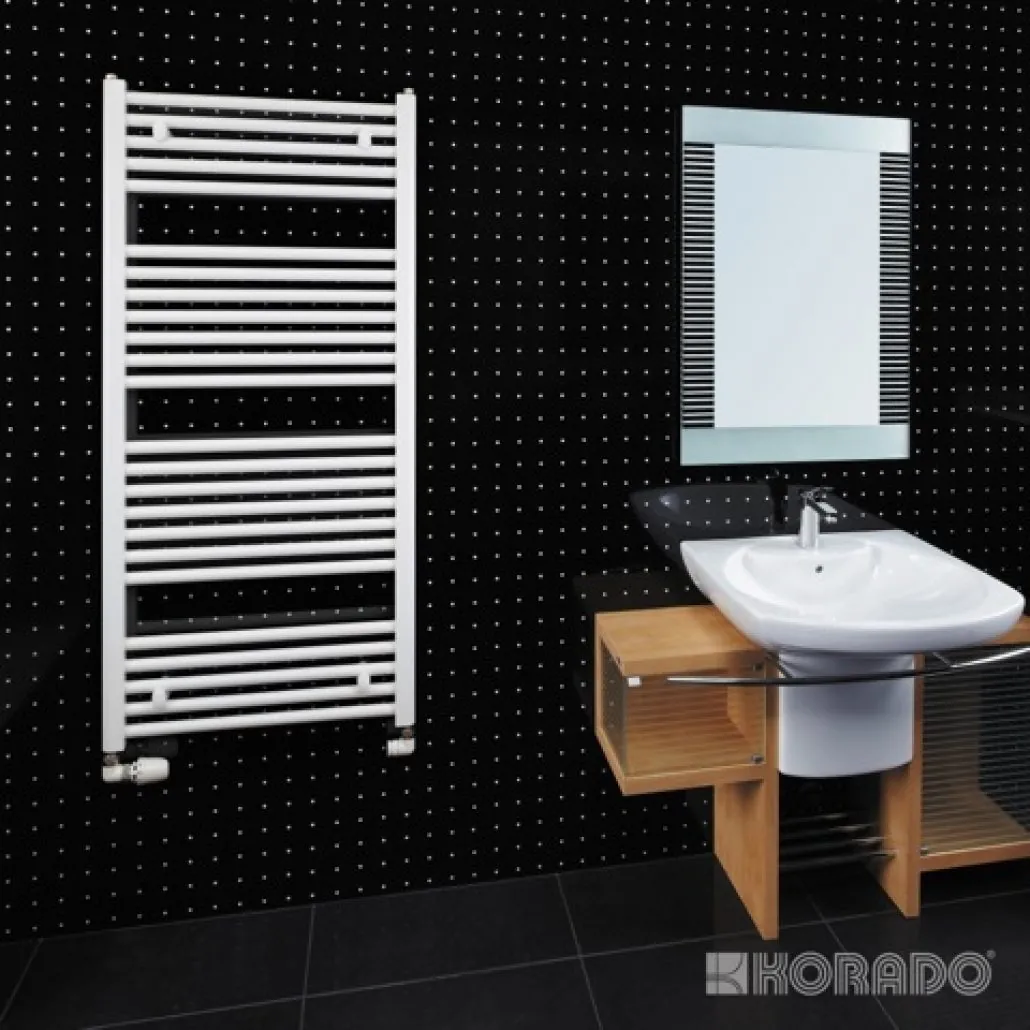
Panel & column radiators
- Warm-up
- 15–25 min
- Flow temp (HP)
- 45–55 °C
- Retrofit
- 1–3 days
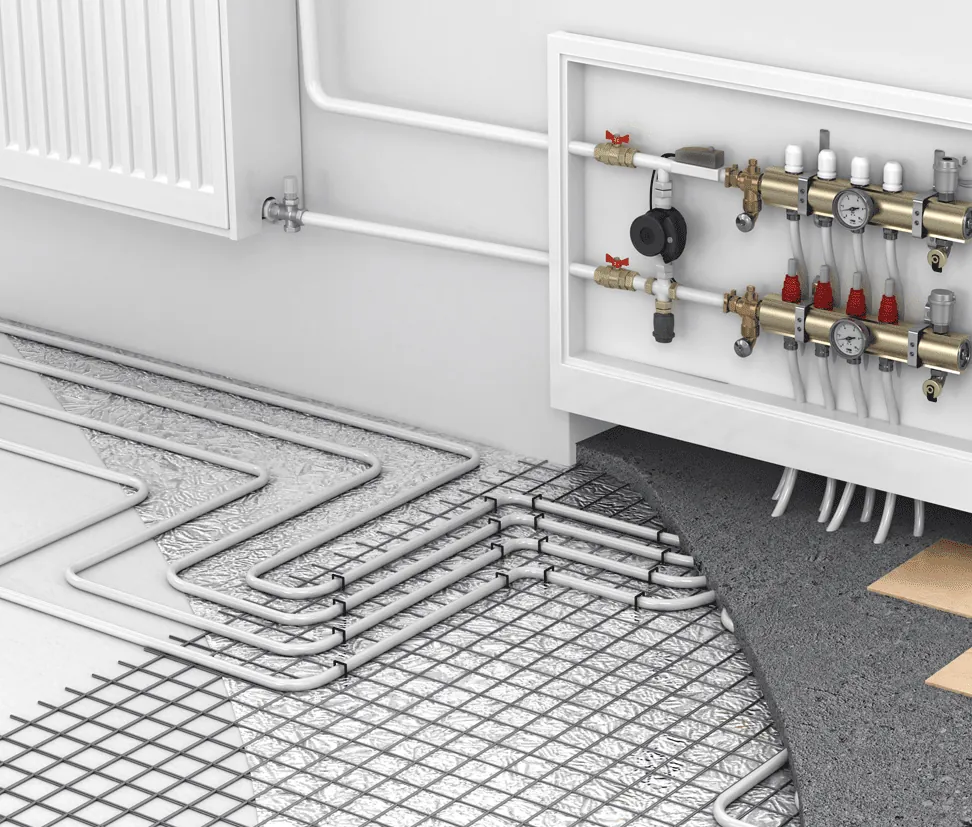
Underfloor heating
- Flow temp
- 35–45 °C
- Cooling
- Yes, reversible
- Pipe life
- 30+ years
Why the emitter matters more than it looks
The emitter is the part of a hydronic system you live with every day. It decides how quickly a room warms, what you see on the walls and floor, whether the system can cool in summer, and how hot the water has to be, which sets how efficiently a heat pump runs for the life of the system. A heat source can be swapped in a day; pipework in a slab or a skirting line behind your joinery is there for decades. That’s why we choose emitters room by room from a heat-loss calculation, and why the honest answer in most homes is more than one type.
Hydronic heat emitters compared: ThermaSkirt vs radiators vs underfloor heating
| ThermaSkirt skirting | Panel radiators | Underfloor heating | |
|---|---|---|---|
| Warm-up speed | Quick. A low-mass aluminium profile, so it responds far more like a radiator than a slab | Fastest: 15–25 min from cold | Slowest: in-slab responds over hours; in-screed a little quicker |
| Comfort | Gentle, low-level warmth along every external wall, with no single hot spot | Even room heat, strongest near the panel; radiant plus convective | Most even of all: warm floor, uniform room, nothing on show |
| Install cost band | Priced per lineal metre; quoted after a heat-loss calculation | $12k–$30k for a full home | $22k–$45k in-screed retrofit; $30k–$55k in-slab with heat pump (200 m² Sydney) |
| Retrofit disruption | Low. Old skirting off, profile on; floors and plaster stay | Lowest: 1–3 days, home-run pipes from a manifold | Highest: finishes lifted, 30–35 mm screed, 5–10 days on site |
| Heritage suitability | Excellent. Keeps the period look with no wall panels or lifted boards | Good. Klassic column radiators suit period rooms; panels need wall fixings | Limited: only where floors are being replaced, or in a new extension |
| Heat-pump fit (flow temp) | Good: 45–55 °C | Good when sized for it: 45–55 °C (55–70 °C on conventional sizing) | Best: 35–45 °C, the heat pump’s most efficient band |
| Cooling | Heating emitter; we add fan coils for cooling | No. Heating only | Yes: chilled water on a reversible heat pump with dew-point control |
| Furniture & wall space | No wall panels, but needs clear skirting runs; beds and built-ins against it cut output | Takes a section of wall, usually under a window; keep sofas and curtains clear | Frees every wall; the floor finish is allowed for in the design |
| Aesthetics | Looks like skirting: about 150 mm tall, 22 mm deep | Visible, but can be a feature: slim panels, columns, towel rails | Invisible |
| Maintenance | Annual heat-source service; room zones checked at the manifold | Annual service; occasional bleeding, TRVs checked | Annual service; pipe network design life 30+ years |
Indicative figures; cost bands are installed ranges for typical homes. Every AHHAC system is sized and quoted from a room-by-room heat-loss calculation.
ThermaSkirt skirting board heating: where it wins and where it doesn’t
ThermaSkirt replaces an ordinary skirting board with a hollow aluminium profile, 22 mm deep and about 150 mm tall, carrying integrated 12 mm hydronic pipework. Warm water at 45–55 °C runs right around the room, so heat is released low down along the external walls and under the windows, which is exactly where a room loses it. Each room still gets its own thermostat through a manifold. As an authorised installer of ThermaSkirt in Australia, we reach for it when an owner wants whole-home hydronic warmth and doesn’t want to see any of it.
- Period rooms where boards can’t be lifted and wall radiators would cover joinery or need fixings into original plaster.
- Narrow terrace front rooms, hallways and rooms lined with windows, where there’s no spare wall for a panel.
- Heat-pump systems: moderate flow temperatures keep the heat pump in an efficient band.
- A tidy install. The old skirting comes off, the profile goes on, and floors and plaster stay intact.
- Output depends on clear wall length. At roughly 70–90 W per metre, a bedroom with about 14 metres of usable skirting gives around 1.0–1.3 kW.
- Draughty front rooms with tall ceilings, a bay window and a fireplace breast can need more than their walls can carry.
- Kitchens and rooms full of built-in wardrobes lose most of their run, and beds or bookcases pushed hard against it cut output.
- It isn’t the emitter for summer cooling. Where cooling matters, we add fan coils.
When a room falls short, we don’t compromise the whole house. We seal draughts and insulate first, because cutting heat loss is cheaper than adding emitters, then top up with a kick-space plinth heater in the kitchen or one slim radiator in the room that needs it. Our heritage Sydney ThermaSkirt renovation, a heritage-listed Federation terrace in Paddington, shows the approach end to end: no visible plant, and not one original feature disturbed.
Panel and column radiators: where they win and where they don’t
Radiators are the most flexible emitter of the three. From the IMAS radiator range, held in Australian stock, we fit European steel panels from K11 to K33, flat-fronted panels, Klassic column radiators for period rooms and Alubain towel warmers for bathrooms, alongside the wider range of hydronic radiators we supply. Every radiator has its own thermostatic valve (TRV), so each room runs at its own temperature.
- Fastest warm-up: 15–25 minutes from cold, ideal for studies, guest rooms and anywhere used on and off.
- The least disruptive retrofit: typically 1–3 days for a whole home, with single home-run pipes from a central manifold and no joins inside walls.
- The most output from the least wall. A K22 or K33 under a window can carry a big, cold room that skirting alone couldn’t.
- The clearest budget: full-home radiator systems typically cost $12,000–$30,000.
- They’re visible and take a section of wall, usually under the window.
- On a heat pump they must be sized for 45–55 °C water, where a panel gives roughly a third to a half of its catalogue ΔT50 rating, so panels get bigger or deeper.
- Heating only. Radiators can’t cool.
- Sofas, beds and full-length curtains in front of a panel push heat where you don’t want it.
The most expensive radiator mistake we see is copying the old panel sizes when a gas system is converted to a heat pump. Our hydronic radiator sizing guide walks through the correction with worked examples, and our hydronic radiators Melbourne page covers sizing for long, cold Victorian winters.
Hydronic underfloor heating: where it wins and where it doesn’t
Underfloor heating lays PEX-A pipe in the slab on a new build, in a 30–35 mm self-levelling screed over an existing subfloor, or directly under timber, tile or stone. The whole floor becomes one large, low-temperature emitter. Add a reversible heat pump and a dew-point sensor, and the same loops carry chilled water in summer.
- The lowest flow temperature of the three (35–45 °C), the band where a heat pump is most efficient.
- The most even, invisible comfort: no wall units, no hot spots and no air movement, which suits asthma and allergy sufferers.
- The only one of the three that also cools, giving silent floor cooling from one all-electric system.
- On a new build the pipe goes in before the pour, so it’s a modest step up rather than a renovation.
- Slow to respond. In-slab systems take hours to come up to temperature and work best as steady background warmth.
- The most disruptive retrofit: floor finishes come up, screed raises the floor, and an average home takes 5–10 days on site.
- The highest install band: $22,000–$45,000 for an in-screed retrofit, $30,000–$55,000 for in-slab with a heat pump on a 200 m² Sydney home.
- Original boards, tessellated hallways and newly laid stone are usually good reasons not to lift the floor.
If you’re only weighing up two of the three, our earlier comparison of underfloor heating vs radiators goes deeper on that pair. For local slab and screed detail, see hydronic underfloor heating Sydney.
Skirting board heating vs radiators, and skirting board heating vs underfloor
Skirting board heating vs radiators
These two are the retrofit pair. Both go in without lifting floors, both connect to a manifold with a thermostat per room, and both run happily from a heat pump at 45–55 °C. The difference is how the heat is packaged. A radiator concentrates a lot of output into one panel, so it can heat a cold room quickly from a small piece of wall. ThermaSkirt spreads a smaller output thinly around the whole perimeter, so it disappears visually but is capped by how many metres of clear skirting a room has. Our rule of thumb: ThermaSkirt where the look matters and the runs are long; radiators where a room’s heat loss outstrips its walls, or where you want heat in 15–25 minutes.
Skirting board heating vs underfloor
These two are the invisible pair. Both are low-temperature, low-profile and kind to a heat pump, but underfloor runs cooler still, feels more even and can cool in summer. What it asks in return is a floor you’re prepared to replace. ThermaSkirt wins whenever the floor stays: original boards, a stone floor you laid two years ago, or an apartment where changing the floor build-up means a conversation with strata. Underfloor wins in new slabs, full strip-outs and new extensions, which is why a period home with a new extension often ends up with both.
The best hydronic emitter by home type
There’s no single best hydronic emitter, but there is a usual best for each kind of home. This is where we typically land after the site visit and heat-loss calculation.
- Usual first choice
- In-slab underfloor through the living areas and bedrooms.
- Often paired with
- Towel rails in bathrooms; a radiator in any room you want warm on demand.
- Watch for
- The design has to be locked before the pour: final plans, floor finishes and the manifold location.
- Usual first choice
- ThermaSkirt in the period rooms, so nothing new is on show.
- Often paired with
- Klassic column radiators where a room needs more than its skirting can carry; towel rails in bathrooms.
- Watch for
- Measure the clear skirting run in every room, and check conservation-area limits on where the outdoor unit can sit.
- Usual first choice
- Underfloor in the new extension slab, which can also cool the open-plan living space.
- Often paired with
- ThermaSkirt or radiators in the original rooms, all from one heat pump.
- Watch for
- Two emitter temperatures on one heat pump: the circuits have to be designed together.
- Usual first choice
- Panel radiators, or ThermaSkirt where wall space is tight.
- Often paired with
- Towel rails in bathrooms; in-screed underfloor only as part of a full strip-out.
- Watch for
- Owners corporation approval for the outdoor unit, core holes and pipe routes. An electric boiler can suit when there’s no room for a heat pump.
- Usual first choice
- Fan coils for summer cooling, piped neatly through the subfloor.
- Often paired with
- Radiators or ThermaSkirt in bedrooms and bathrooms for winter mornings.
- Watch for
- No slab, so underfloor is rarely the answer. Salt air means siting the outdoor unit out of the direct sea breeze.
In Queensland the brief usually flips: summer cooling is the main event and winter heating the extra, so fan coils lead and the heating emitters follow. See hydronic heating Brisbane and our range of hydronic fan coils for how that works on a raised timber home.
Mixing emitters in one home: common, and usually sensible
Most whole-home systems we design use more than one emitter, because rooms are used differently. A typical layout for a period home with a new rear extension looks like this:
- Extension and open-plan living: in-slab underfloor, which also cools in summer on a reversible heat pump.
- Original front rooms and hallway: ThermaSkirt, so the heritage rooms look untouched.
- Bathrooms and ensuites: hydronic towel rails, with an optional electric element for summer towel drying, plus a panel radiator where a room needs more heat than a rail gives.
- Kitchen: a plinth heater in the kick-space, where joinery leaves no skirting and no wall.
It all runs from one heat pump through one or more manifolds, with every room on its own thermostat. The design rule that matters is simple: the heat pump makes water at the temperature the most demanding circuit needs, and cooler circuits are blended down from there. If the radiators need 50 °C and the underfloor 40 °C, the heat pump works at 50 °C whenever the radiators call for heat. The more of the house you design for low-temperature water, the cheaper the whole system runs, so on mixed systems we often upsize radiators to let them run nearer the underfloor’s temperature. Our heritage home extension case study with Maxa, Viessmann and ThermaSkirt works through a mixed system of exactly this kind, from heat-loss figures to circuit temperatures.
What each emitter costs to install
These are installed ranges for typical homes. Your quote depends on floor area, heat loss, heat source and the emitter mix.
Full-home system, usually installed in 1–3 days.
$22k–$45k in-screed retrofit; $30k–$55k in-slab with heat pump (200 m² Sydney).
Plus heat source, manifold and controls; quoted after a heat-loss calculation.
Across all emitters, whole-home hydronic systems typically land between $20,000 and $60,000+ installed. ThermaSkirt is priced per lineal metre, so its cost tracks the length of wall being heated, and we don’t publish a per-metre figure for the same reason we don’t quote radiators off a floor plan: the number only means something once the room-by-room heat loss tells us how many metres each room needs and whether any room needs a top-up emitter. Our design and quote is fixed-fee and back within 24 hours of the site visit.
On running costs, the heat source matters far more than the emitter. A heat pump typically costs 60–75% less to run than gas, and the cooler the water it makes, the better it does, which slightly favours underfloor, with ThermaSkirt and properly sized radiators close behind. Our hydronic heating running costs guide has the full comparison. One rebate note: air-to-water heat pumps used for hydronic space heating aren’t eligible for STCs, as our heat pump rebates guide explains.
Heat-pump sizing: how your emitter choice changes the system
A heat pump is sized to the whole home’s heat loss on the design day, not to the emitter. A Melbourne home designed to −1 °C, with around 1,500 heating degree-days a year, needs more capacity than the same house in Sydney at roughly 700–900. What the emitters change is the water temperature the heat pump has to produce, and that decides how efficiently it works. Our heat pump systems run at a COP of roughly 3.5–5.5, and the cooler the water, the nearer the top of that range they sit.
- Underfloor (35–45 °C): the easiest load for a heat pump. Output is limited by floor surface temperature and the floor finish, which the design allows for.
- ThermaSkirt (45–55 °C): output is set by metres of skirting, so a room that falls short is better topped up, or insulated, than solved by running the whole house hotter.
- Radiators (45–55 °C when sized for a heat pump): panels rated at ΔT50 deliver roughly a third to a half of that figure at these temperatures, so they’re sized up. Our radiator sizing guide for heat pumps shows the maths.
- Mixed systems: the warmest circuit sets the flow temperature, so we size the warm-water emitters generously to keep it down.
Because a heat pump’s output and efficiency both rise as water temperature falls, a house designed around low-temperature emitters can sometimes use a smaller unit. Our hydronic heat pump range includes the Maxa i-290 R290 monoblock from 6 to 27 kW, which lets us match capacity closely to the calculated load rather than rounding up to the nearest big box.
Where to start
We design and install all three emitters from six showrooms across NSW, the ACT, Victoria and Queensland, so the recommendation follows your home rather than our stock. In Sydney, start with hydronic heating Sydney; in Melbourne, where long winters make emitter sizing matter more, see hydronic heating Melbourne. Or book a heat-loss calculation and quote, and we’ll recommend the mix room by room.