Hydronic Heating & Cooling Specialists
Home/Melbourne/Camberwell
Melbourne's inner east (Boroondara) · VIC

Hydronic heating Camberwell

Hydronic heating, cooling and hot water for Camberwell homes — designed and installed by AHHAC, Melbourne's hydronic specialists, from our nearest showroom in Laverton North.

The short answer

Updated

AHHAC designs and installs hydronic heating in Camberwell and across Boroondara, where many homes already have gas hydronic radiators with boilers due for replacement. In most Edwardian, inter-war and Californian bungalow homes the existing pipework and most radiators can stay while a heat pump replaces the boiler, typically cutting running costs by 60–75% compared with gas. We check every radiator against a room-by-room heat-loss calculation and provide a fixed-fee quote within 24 hours of the site visit.

Melbourne design temp
−1 °C
Heating degree-days
~1,500
Heat pump vs gas
60–75% cheaper to run
Nearest showroom
Laverton North VIC

Reviewed by the AHHAC Technical Team — licensed plumbers & hydronic engineers, NSW Lic 262528C.How we write & review

Authorised supplier & installer
Maxa authorised supplierViessmann authorised installerImmergasSimeThermaSkirt™
Plumbing Lic 262528CABN 85 164 746 4906 showrooms · NSW · ACT · VIC · QLDEst. 1998

AHHAC designs and installs hydronic heating in Camberwell and across Boroondara, from Canterbury and Surrey Hills to Glen Iris, Balwyn and Ashburton. A lot of the work here is not a brand-new system. Many Camberwell homes already have gas hydronic heating, with a boiler in a cupboard or on an outside wall and panel radiators through the house, and many of those boilers are now well into their second decade. Owners want to know whether to replace like for like, switch to an all-electric heat pump, or do something in between. We answer that from a room-by-room heat-loss calculation, with a fixed-fee design and quote back within 24 hours of the site visit, as part of our wider hydronic heating Melbourne service.

Camberwell's housing: Edwardian, inter-war and Californian bungalow

Three eras of housing dominate Camberwell's streets, and each one shapes the heating design. Edwardian and Federation villas have high ceilings, double-hung windows, ornate cornices and suspended timber floors, often with fireplaces that were never meant to heat a whole house. Inter-war homes from the 1920s and 1930s, including the many Californian bungalows with their deep verandahs and low-pitched roofs, are usually brick or weatherboard on timber stumps with good subfloor access. Then there are the post-war homes, the contemporary rebuilds and the townhouse developments that have replaced some of the original stock.

The common thread in the period homes is suspended timber floors and walls that take a while to warm through. Hydronic radiators suit them well: pipework runs through the subfloor, so floors and walls stay intact, and a radiator under each window counters the cold down-draught from the glass. Melbourne has roughly 1,500 heating degree-days a year and a −1 °C heating design temperature, so the heating runs for a long season and correct radiator sizing pays back every winter. Tall Edwardian ceilings add volume and heat loss, which is why we never size radiators from floor area alone.

Heritage Overlays and where the plant goes

Heritage Overlays are common across Boroondara, so there is a good chance your street is covered by one. Inside the house, hydronic heating is about as heritage-friendly as heating gets. Radiators can be removed later without damage, ThermaSkirt skirting-board heating replaces the skirting and all but disappears, and there are no ducts cut through ceilings or floors. Outside, a heat pump is a visible piece of plant, so we site it at the rear or behind a side fence, clear of neighbours' bedroom windows. If your property is under a Heritage Overlay, check with the City of Boroondara whether a permit is needed before plant goes anywhere visible from the street.

Replacing an old gas hydronic boiler: three options

If your gas boiler is approaching 20 years old, losing pressure, cycling on and off, or needing parts that are hard to find, you have three realistic paths. Each keeps your existing pipework and most or all of your radiators; what changes is the heat source.

OptionUpfront costRunning costBest when
Condensing gas boiler, such as the Viessmann Vitodens 100-W (up to 98% efficient)LowestLower than an old non-condensing boiler, but still on gasYou expect to sell or rebuild within a few years, or there is nowhere suitable for an outdoor unit
All-electric heat pump, such as the Maxa i-290 R290 monoblockHighestTypically 60–75% lower than gasYou plan to stay, have or want rooftop solar, and the radiators can deliver enough heat at lower water temperatures
Hybrid: heat pump added, existing boiler kept as backupSimilar to a heat pump aloneMostly heat-pump running costsThe boiler still has some life in it and a few rooms are hard to heat at heat-pump temperatures

A condensing boiler only reaches its best efficiency when the water returning to it is cool enough for the flue gases to condense, so on a like-for-like swap we set flow temperatures and balance the radiators to suit, rather than simply bolting a new boiler onto old settings.

What a heat pump conversion involves

Most Camberwell gas radiator systems were designed around water at 70–80 °C. A heat pump runs most efficiently at lower temperatures, and a radiator's output can fall by roughly half when the water running through it is that much cooler. That does not rule out a conversion; it means checking the numbers room by room. A typical conversion runs like this:

  1. Heat-loss check. We calculate each room's heat loss and compare it with what its existing radiator delivers at heat-pump water temperatures.
  2. Radiator changes. Usually only a few rooms fall short, most often a large living room or a room with a lot of glass. Those radiators are upsized, typically to a deeper double or triple panel from the IMAS range, and the rest stay.
  3. Flush and treat. Old systems carry sludge and corrosion debris that a gas boiler tolerated. We flush the circuit and dose it with inhibitor before the heat pump is connected.
  4. Outdoor unit and power. The heat pump goes outside, usually at the rear, with a dedicated electrical circuit.
  5. Changeover. The old boiler stays in service until the heat pump is commissioned, so you are not left without heating.

Fabric upgrades help too. Topping up ceiling insulation, insulating under the timber floor of a bungalow and sealing draughts around old windows and fireplaces all lower the heat loss, which can mean fewer radiators need upsizing. If your gas hot water service is also ageing, replacing it with a heat pump water heater such as the Viessmann Vitocal 161-A at the same time takes the house off gas entirely. A registered heat pump water heater may attract STCs; the air-to-water heat pump that heats your radiators does not, and Victorian Energy Upgrades heating incentives cover air-to-air reverse-cycle units rather than hydronic heat pumps. Our guide to replacing a gas hydronic boiler with a heat pump covers the process in more depth, and heat pump hydronic heating Melbourne covers equipment choices.

Underfloor heating in Camberwell extensions

Many Camberwell renovations keep the period rooms at the front and add an open-plan kitchen and living area at the rear on a new slab. That extension is the ideal place for underfloor heating: the pipework goes in before the slab or screed is poured, and the floor runs at 35–45 °C, which keeps a heat pump in its most efficient range. The original rooms keep their radiators, and one heat pump runs both, with the radiators sized to work at the lower temperature or a mixing valve on the underfloor circuit. In-slab underfloor responds over hours rather than minutes, so it is best run steadily through the heating season, while radiators look after bedrooms that only need heat morning and evening. If you are weighing the options, our comparison of ThermaSkirt vs radiators vs underfloor heating sets out the trade-offs.

When hydronic is not the right call

We will tell you if we do not think it is worth it. If your gas boiler is only a few years old and working well, it usually makes sense to improve insulation now and convert when the boiler is due. If you are planning a knock-down rebuild within a few years, a repair or a like-for-like boiler may be the sensible stop-gap. And in a small townhouse or apartment with a modest heating load, a reverse-cycle split system can do the job for less. Whole-home hydronic systems typically cost $20,000–$60,000+ installed and radiator systems $12,000–$30,000, so the system has to earn its place.

Serviced from Laverton North, across the inner east

Camberwell jobs are designed, installed and serviced by our own licensed plumbers and hydronic engineers from our Laverton North showroom, to AS/NZS 3500 and, for gas work, AS/NZS 5601. We work across Camberwell, Canterbury, Surrey Hills, Glen Iris, Balwyn and Ashburton, and in the neighbouring suburbs covered on our hydronic heating Kew, hydronic heating Hawthorn and hydronic heating Toorak pages. For radiator options across the city, see hydronic radiators Melbourne.
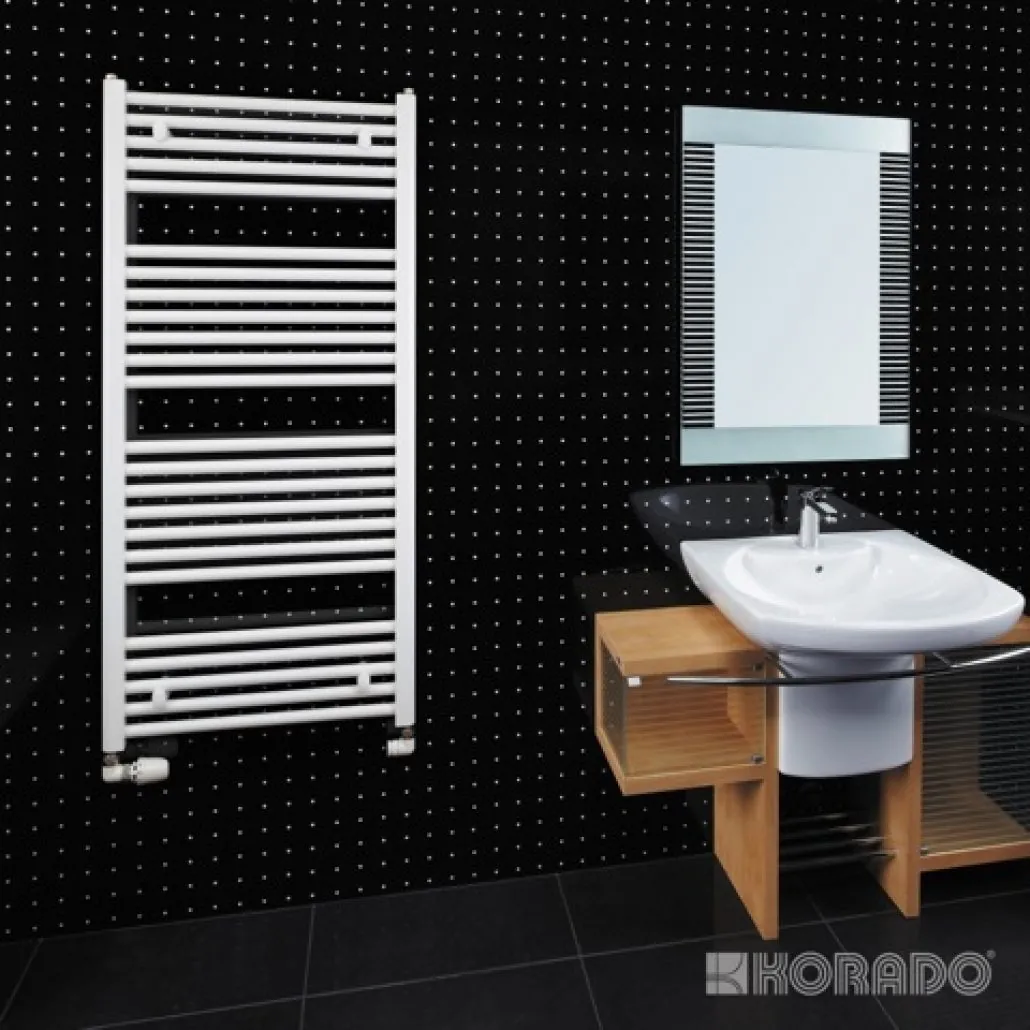

Why Camberwell homes choose AHHAC

  • Existing gas hydronic systems assessed for boiler replacement or heat pump conversion
  • Every radiator checked against its room's heat loss — only undersized panels are upsized
  • Heritage-friendly hydronic radiators and ThermaSkirt for Edwardian and inter-war homes
  • Outdoor units sited at the rear, out of street view and clear of neighbours' bedrooms
  • In-slab underfloor heating for rear extensions, run from the same heat pump
  • Condensing gas boilers such as the Viessmann Vitodens 100-W where staying on gas makes sense
  • Fixed-fee design and quote within 24 hours of the site visit, from our Laverton North showroom
Buying in Camberwell

Buying a Camberwell home with existing hydronic heating: what to check

Plenty of Camberwell houses come to market with hydronic heating already installed, and it is usually listed as a feature. It can be, but a 20-year-old gas system can also be a replacement bill waiting to happen. A few checks before or during the building inspection tell you which one you are looking at.

Checks you can do at an inspection

  • Find the boiler's data plate. The model and manufacture date are usually on a label inside the cover or on the side of the unit. An older non-condensing boiler, with no condensate drain pipe running from it, is likely to be near the end of its life.
  • Read the pressure gauge. If the system has one, it should sit at a steady reading when cold. A gauge near zero, or an owner who regularly tops the system up, points to a leak somewhere in the circuit.
  • Feel every radiator with the system running. Cold at the top suggests trapped air; cold at the bottom suggests sludge. One or two cold radiators can be bled, balanced or flushed; a house full of them points to a neglected system.
  • Look under the floor. In a bungalow or Edwardian home, check the subfloor for corroded fittings, stains beneath radiator connections and pipe lagging that has fallen away.
  • Ask for the paperwork. Service records, the original design or radiator schedule, and any water treatment history all make the next owner's job easier.
  • Check the controls. A single old timer and a few radiator valves is common. Room zoning and modern thermostats make a big difference to comfort and running cost.

None of these is a reason to walk away. A system with sound pipework and radiators is a genuine asset, because it can usually be converted to a heat pump without starting again. What the checks give you is a realistic budget: a flush and service, a new boiler or a heat pump conversion. Our guide to hydronic heating problems and troubleshooting explains the common faults, and our page on central hydronic heating flushing covers when a flush is worthwhile. Once you have the keys, we can assess the system as part of our hydronic heating Melbourne service.

Written from on-site experience by the AHHAC Technical Team.

Free, fixed-fee quote

Get a hydronic heating quote in Camberwell

  • Room-by-room heat-loss calculation — never a rule-of-thumb guess
  • Fixed-fee design and quote back within 24 hours of the site visit
  • Installed by our own licensed team (NSW Lic 262528C) — no subcontractors
Prefer to talk? Tap to call1300 76 53 39
Tell us a little about your home — takes 30 seconds

No obligation. We reply within 24 hours and only use your details to prepare your quote.

This form is protected by reCAPTCHA and the Google Privacy Policy and Terms of Service apply.

Who designs & installs this

Licensed, in-house hydronic engineers serving Camberwell — since 1998.

AHHAC's in-house design and service team — licensed plumbers and hydronic engineers (Lic 262528C) who have designed and installed 2,400+ hydronic heating, cooling and hot water systems across Australia since 1998.

We design hydronic heating from a room-by-room heat-loss calculation, install it with our own licensed plumbers to AS/NZS 3500 (plumbing) and AS/NZS 5601 (gas), commission and document it, and service it for the life of the system. Nothing is subcontracted out.

  • Heat-loss calculation before any quote
  • Fixed-fee design back within 24 hours
  • Authorised Maxa, Viessmann & Immergas installer
  • Commissioning report at handover
  • Six showrooms: NSW · ACT · VIC · QLD
  • Ongoing local service & maintenance
262528C
NSW plumbing licence
85 164 746 490
ABN (verifiable on ABN Lookup)
2,400+
Hydronic systems installed
Since 1998
Operating in Australia
AS/NZS 3500
Plumbing & drainage standard
AS/NZS 5601
Gas installations standard
Common Camberwell questions

Hydronic heating Camberwell — FAQ

Should I replace my old gas hydronic boiler with a heat pump?+
If you plan to stay in the house and the radiators can deliver enough heat at lower water temperatures, usually yes: a heat pump typically costs 60–75% less to run than gas and pairs well with rooftop solar. If you expect to sell or rebuild within a few years, or there is nowhere suitable for an outdoor unit, a like-for-like condensing gas boiler can be the more sensible choice.
Will my existing radiators work with a heat pump?+
Most will. Radiators sized for a gas boiler give out less heat at the lower water temperatures a heat pump prefers, so we check each one against its room's heat loss. Typically only a few, often in a large living room or a room with a lot of glass, need upsizing to a deeper double or triple panel. The pipework is normally kept after a flush.
Do I need a permit to install a heat pump on a heritage home in Boroondara?+
It depends on your property's planning controls, so check with the City of Boroondara before plant goes anywhere visible from the street. Heritage Overlays are common across Boroondara. In practice we site the outdoor unit at the rear or behind a side fence wherever the block allows, and the indoor work, whether radiators or skirting heating, is reversible and leaves period features intact.
How much does hydronic heating cost in Camberwell?+
Whole-home hydronic systems typically cost $20,000–$60,000+ installed and radiator systems $12,000–$30,000. Converting an existing gas radiator system usually costs less than a new system because the pipework and most radiators stay; the main costs are the heat source, any radiator upsizing and the flush. We provide a fixed-fee design and quote within 24 hours of the site visit.
Can you add underfloor heating to a Camberwell rear extension?+
Yes. A new slab or screed in a rear extension is the ideal place for underfloor heating. The pipework is laid before the pour, and the floor runs at 35–45 °C from the same heat pump that serves the radiators in the original rooms. We size the radiators to work at the lower temperature or fit a mixing valve on the underfloor circuit.
Is a Californian bungalow better suited to radiators or underfloor heating?+
Radiators, in most cases. Californian bungalows usually sit on timber stumps with good subfloor access, so pipework runs underneath without lifting floorboards, and a radiator under each window counters the cold from the glass. Underfloor heating suits a slab extension at the rear. Insulating under the timber floor at the same time cuts heat loss and can reduce the radiator sizes needed.
Are there rebates for replacing a gas boiler with a heat pump in Victoria?+
Not for the hydronic heat pump itself. Victorian Energy Upgrades heating incentives cover air-to-air reverse-cycle units rather than hydronic heat pumps, and STCs apply only to registered heat pump and solar water heaters, not air-to-water units used for space heating. If you replace gas hot water with a registered heat pump water heater at the same time, that part may qualify. Our heat pump rebates guide has the detail.
Do you cover Canterbury, Surrey Hills, Glen Iris, Balwyn and Ashburton?+
Yes. From our Laverton North showroom we design, install and service hydronic heating across Camberwell, Canterbury, Surrey Hills, Glen Iris, Balwyn, Ashburton and the rest of Melbourne's inner east, plus nearby Kew, Hawthorn and Toorak. Call 1300 76 53 39 or request a quote online to book a site visit and room-by-room heat-loss calculation.

Last updated · AHHAC — serviced from Laverton North

Reviews

What VIC customers say about AHHAC

★★★★★
Rated 5-star across NSW · ACT · VIC · QLD
★★★★★

"We've worked with AHHAC for 17 years now. They've installed and serviced our hot water plant across three commercial buildings. They pick up the phone on weekends — that's why we keep coming back."

James Holloway
Strata Manager · Melbourne CBD
Commercial hot water + heating service
★★★★★

"We commissioned AHHAC after another contractor abandoned the job halfway. They took over the design, fixed the existing issues, finished the install and gave us a five-year warranty. They saved the project."

Patricia Mendez
Architect · Carrum Downs, VIC
Project rescue — hydronic + cooling
★★★★★

"AHHAC delivered our 22-zone underfloor system on time, on budget and to spec. The crew were tidy, the documentation was thorough, and the commissioning was textbook. Couldn't ask for more from a trade partner."

David Chen
Custom Builder · Mosman, NSW
New build — 850m² residential
Hydronic heating across Melbourne

More from our hydronic heating melbourne team

Last updated Content reviewed by the AHHAC Technical Team (NSW plumbing licence 262528C)Editorial standards
Call nowFree quote